
How to Sew a Chair Pad
This post contains affiliate links. As an Amazon Associate, we earn from qualifying purchases.
To sew a chair pad, start by selecting a strong fabric and measuring your chair seat, adding an extra inch for seams. Cut the fabric and sew three sides with a 1/4-inch seam, leaving one side open. After inserting a foam pad, hand-stitch the opening closed, and you’re done! For added style, consider tufting your chair pad. If you encounter spills, don’t worry—there are effective ways to tackle stains. Stay tuned for more tips and detailed guidance throughout the article!
Essential Facts in 30 Seconds
- Measure chair seat dimensions and add seam allowances for pattern accuracy.
- Cut fabric and foam carefully, ensuring clean edges and labeling pieces.
- Sew three sides of the fabric with a 1/4-inch seam allowance; leave one side open.
- Insert foam and hand stitch the opening closed using a slip stitch.
- Optional: Add tufting by marking a grid and securing tufts with thread.
Materials and Tools Needed
Sewing a chair pad is a fun project! Start with strong fabric. Good choices are cotton, cotton blends, or upholstery fabric. Buy 1 to 1.5 yards based on your chair size. Pre-wash the fabric to prevent shrinkage. To ensure comfort, consider using a padded chair cover for a more enjoyable seating experience. Using a durable fabric helps the cushions withstand frequent use. Additionally, selecting upholstery fabric is ideal for long-lasting durability.
For padding, use a firm foam seat pad, about 2 inches thick. You can also add Poly-Fil for softness. Mattress topper foam is a nice option too! Additionally, ensure that the padding is cut to the same size as the fabric for a proper fit.
Gather matching thread and solid sewing tools. A reliable sewing machine helps, especially with thicker layers. Collect your supplies and let your creativity shine.
Got a ketchup stain? No problem! Clean it up and keep sewing!
Measuring and Creating Patterns
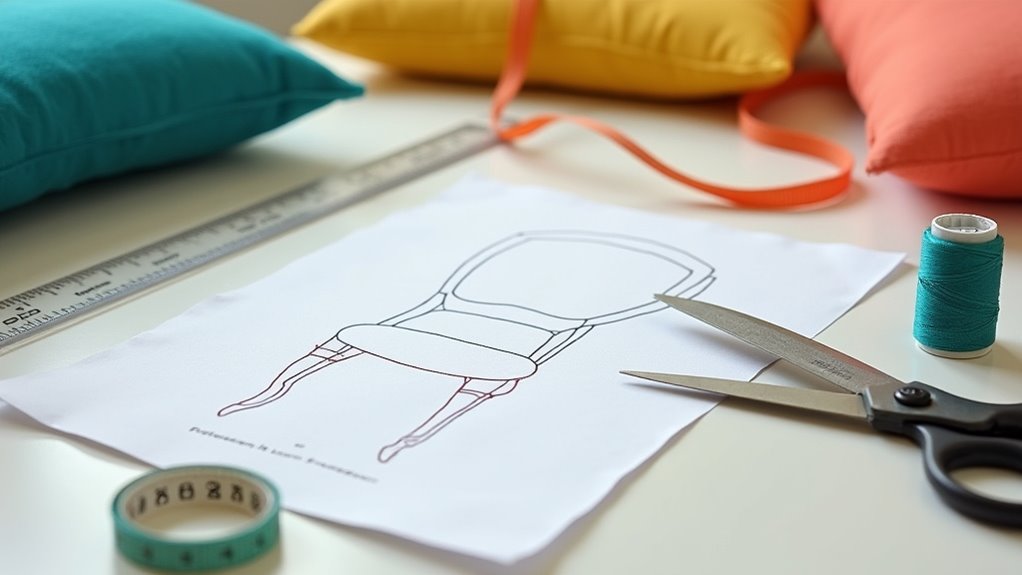
Measuring your chair seat is key before sewing your chair pad. Grab a tape measure. Measure the width and length of your seat. Add an extra inch for seam allowances. If your cushion needs ties or should fit snug against a backrest, measure those areas as well. For unique shapes, trace the outline onto heavy paper for an accurate pattern.
Once measurements are ready, place the pattern material on the chair seat. Align it perfectly. Trace around the edges with a sharp marker. Make sure to stay slightly oversized for adjustments. Mark seam allowances, usually about half an inch. Note any ties or decorative shapes too. Use Dura Skrim patterning material as a reliable option for creating your cushion pattern. When cutting your fabric, remember to also add extra inches to ensure a comfortable fit. Additionally, consider using durable fabric that complements your dining room decor for a cohesive look.
Additionally, ensure that your measurements take into account the foam condition if you plan to add padding for extra comfort. Double-check all your measurements before cutting. A snug fit will make your cushion look great!
Let’s get started on measuring and making patterns with confidence!
Cutting and Preparing Fabric
Cutting and preparing fabric turns your ideas into reality! Start with a flat surface, like a big table or the floor. Lay your fabric out smooth and wrinkle-free. Align it with a straight edge to square it up. Hold the fabric taut, but not stretched. Keep those grain lines straight.
Use sharp scissors or a rotary cutter for clean cuts. A cutting mat protects your surfaces. Investing in a good metal square helps ensure your fabric is properly squared before cutting. Measure twice, cut once. Don’t forget to add seam allowances. For lightweight fabric, apply fusible interfacing for extra strength.
After cutting, label your fabric pieces to avoid confusion. Mixing up sections is frustrating!
With these cutting and preparation tips, you’re ready to create an awesome chair pad!
Sewing and Assembly Techniques
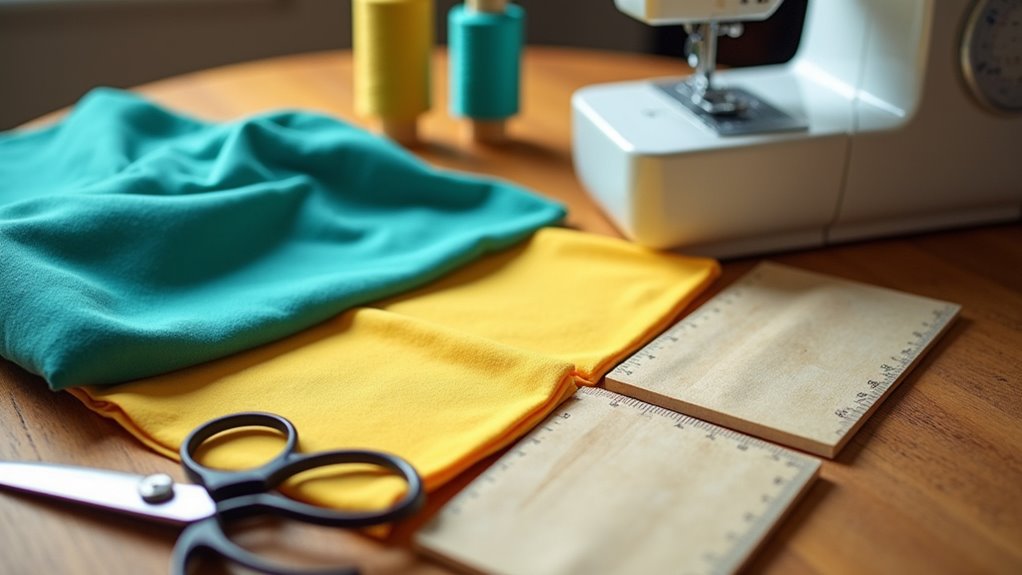
Let’s dive into sewing and assembling your chair pad! Start with seam allowance techniques. Use a 1/4-inch seam allowance when stitching your cushion pieces. Remember to backstitch to secure your seams. Sew three sides with the right sides facing each other. Cut corners diagonally for a flat finish.
For cushion stuffing, insert foam halfway first. Then fold your cushion to make it easier. Use this handy table to keep track of steps!
| Step | Action | Tip |
|---|---|---|
| Stitching | Use backstitch for secure seams | Take your time! |
| Stuffing | Insert foam or stuffing as needed | Smooth out wrinkles inside |
| Closing | Hand stitch openings with slip stitch | Keep it invisible for a clean look! |
| Final Touch | Press seams flat for a polished finish | A smooth cushion is a happy cushion! |
You are all set to use these sewing techniques! Enjoy making your chair pad!
Tufting and Finishing Touches
Adding tufting to your chair pad brings style and comfort. Start by selecting your tufting method. Options include hand-folded or button tufting. Both methods add charm. Mark a grid on your cushion to keep your tufts organized.
Insert your tufting needle from the back and pull the thread through. Leave a 5-inch tail for securing. Pull the thread tight to create nice depressions. Replacing padding can further enhance the comfort of your chair pad. Additionally, you might consider using foam for cushioning to provide extra support.
Next, secure the thread with a tight knot at the back. This keeps everything in place. If you used chalk for marking, dampen it lightly to erase any marks.
Finally, trim any extra thread so it’s flush with the fabric. This prevents discomfort. With these steps, your chair pad will look great and feel cozy. Enjoy your stylish, warm seat! Additionally, you may want to replace the foam if it’s damaged for an even more comfortable experience.
Frequently Asked Questions
What Type of Fabric Is Best for Outdoor Chair Pads?
For outdoor chair pads, use solution-dyed acrylic fabrics like Sunbrella. These fabrics last a long time outside. They resist UV fading and dampness. This means they stay bright and dry, no matter the weather. The breathability of these materials keeps you comfortable. They are perfect for sunny days or rainy afternoons. Choosing the right fabric can make your outdoor space more enjoyable. Enjoy your time outside with durable and comfy chair pads.
How Do I Clean and Maintain My Chair Pads?
Proper chair pad maintenance boosts comfort and keeps them looking great. Here are some simple cleaning tips.
Vacuum your chair pads regularly. This removes dirt and dust. Spot clean any stains right away. Use a damp cloth and mild soap. Rinse the area with water and dry it well.
Always air dry your chair pads completely. Never use a dryer. Heat can damage the fabric.
For deep cleaning, check the care label. Some pads are machine washable. Follow the instructions for best results.
Can I Use Recycled Materials for Chair Cushions?
Recycled fabrics make great chair cushions. They help the environment and cut costs. You can use old clothes or fabric scraps. Mix different textures and colors for a fun look. This way, your cushions will stand out and be unique. It’s a smart choice for your home and the planet. Plus, using recycled materials reduces waste. So, get creative and enjoy your new cushions!
What Are the Benefits of Tufting Versus Non-Tufted Cushions?
Tufted cushions keep their shape well. They offer a soft, cozy feel. This makes them great for comfort and style. Non-tufted cushions have a firmer surface. They provide more support and a flatter look.
Your choice depends on what you like. Do you want softness or firmness? Both options have their strengths. Tufted cushions add a touch of elegance. Non-tufted cushions are practical and simple.
Think about your needs. Consider how you use your furniture. Comfort and support matter. Choose the cushion that fits your lifestyle best.
How Do I Choose the Right Foam Density for Comfort?
Choosing the right foam density is key for comfort in seating. Foam comes in different types. Low-density foam is soft and cozy. It feels nice but may not last long. Medium-density foam strikes a good balance. It offers comfort and support. This type is great for everyday use. High-density foam is firm and durable. It holds up well with frequent use.
Consider how you will use the seating. For a soft feel, go with low density. For comfort that lasts, choose medium density. For strong support, high density is best. Always think about your needs. Comfort is important for a great seating experience.
Conclusion
You’ve made your very own chair pad! It feels like a cozy hug for your seat. Imagine sitting on that comfy cushion after a long day. You’ll feel like you’re sinking into a cloud. You did a fantastic job, so give yourself a high-five! Every stitch brought you closer to something special. It’s like building a fort with blankets—fun and rewarding. Now, show off your handiwork! Enjoy your new chair pad!