
How to Fix a Wobbly Chair
This post contains affiliate links. As an Amazon Associate, we earn from qualifying purchases.
To fix a wobbly chair, start by checking for loose screws or uneven legs, as tightening them often resolves the issue. If the legs are uneven, use wood shims or install adjustable levelers for a stable solution. For a more thorough fix, disassemble the chair, clean old glue from the joints, apply fresh glue, and clamp it tightly until it cures. This will restore your chair’s sturdiness. For those interested, further explanations and additional repair tips will follow in the article.
Essential Facts in 30 Seconds
- Inspect chair legs for height differences and tighten loose screws.
- Use wood shims to balance uneven legs or install adjustable levelers.
- Disassemble the chair, apply wood glue to joints, and clamp for repairs.
- Check and tighten corner blocks and screws contributing to wobbling.
- Regularly maintain the chair by checking for loose fasteners and ensuring legs are even.
Causes of a Wobbly Chair
A wobbly chair can be quite annoying. Many things can cause this problem. One common reason is loose or worn fasteners. Over time, screws and bolts can get loose. This makes the chair feel unstable.
Another cause is uneven chair legs. If the legs weren’t tightened properly during assembly, they can lead to wobbling. Damaged parts also play a role. Worn-out wheels or weak joints can make the chair feel like it’s moving on its own. Additionally, uneven flooring can contribute to instability in the chair. Regular maintenance is crucial to identify and address issues that may lead to wobbling. Regular inspections can help detect loose legs before they become a larger issue. Furthermore, tightening screws can greatly enhance the stability of your chair.
Environmental factors can contribute too. An uneven floor can make a chair wobble even more.
Regular maintenance helps. Tighten fasteners and check the leg lengths often. A little wood glue works wonders for preventing wobbles. With some care, your chair can be as steady as a rock!
Basic Tools and Materials Needed
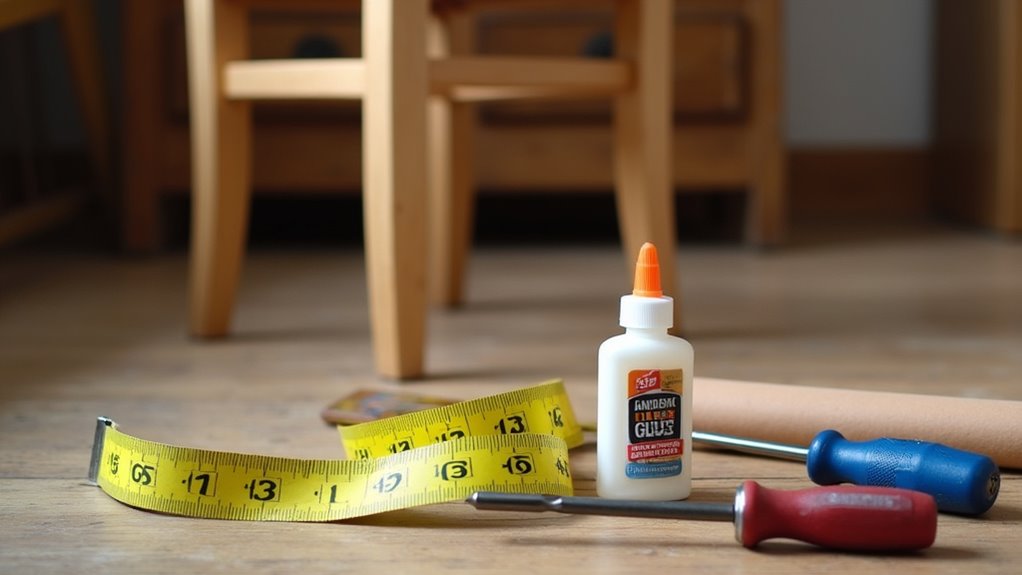
Get ready to fix that wobbly chair! You need some basic tools and materials.
First, grab a hammer and a utility knife. Sandpaper will help smooth out rough spots. A good screwdriver is key for tightening screws. Regular maintenance can help prevent wobbly chairs. Tightening screws or bolts can significantly improve the stability of your chair. Additionally, addressing any cracked legs early on will help maintain the chair’s integrity.
Wood glue is essential for strong joints, particularly when fixing wobbly legs. Clamps will keep everything in place while the glue dries.
With these tools, you can make your chair sturdy and safe. Let’s get started!
Essential Tools Overview
Fixing a wobbly chair can be fun. Having the right tools makes it easier.
Gather these important items for your chair inspection:
- Screwdrivers: Use flathead and Phillips for those annoying screws.
- Allen wrenches: Great for adjusting tricky bolts.
- Clamps: Keep glued joints tight while they dry.
- Rubber mallet: Helps with gentle disassembly.
- Sandpaper: Prepares your joints for a strong bond. Additionally, assessing the damage can help you determine the best repair method before you begin. Regularly inspecting your chair for signs of wear can also prevent future wobbliness. One effective way to reinforce stability is to apply wood glue where needed, ensuring a strong connection between parts.
Furthermore, tightening loose screws and bolts can often be the first step to eliminating any wobble. With these tools, you’ll fix any wobble.
Keep your tools in good shape, too. A well-maintained tool works better.
Let’s make that chair sturdy again, step by step. Great job taking on this project!
Recommended Materials Checklist
Ready to fix that wobbly chair? Gather these essential materials first.
Use Jorgensen clamps and bar clamps to hold glued joints tight. Sanding paper and a green 3M pad will help you smooth surfaces. Don’t forget wood glue—Titebond is a great choice! A small paintbrush helps with precise glue application. Additionally, consider using a sturdy cardboard tube as a temporary fix for any height adjustments needed after repairs. A gas lift cylinder can often be responsible for height adjustment issues, so be aware of this if your chair also sinks. Keep a damp rag nearby for easy cleanup. Stubborn glue? Vinegar will help you remove it. For a beautiful finish, use walnut oil to make your chair shine. Additionally, ensure you have wood filler on hand to address any gaps or cracks in loose joints that may contribute to the wobbliness.
If you need to replace parts, have extra wood ready. With these materials and techniques, your chair will be strong and stable in no time!
Step-by-Step Repair by Disassembling and Re-gluing
Disassembling and re-gluing your wobbly chair is easier than it seems. With these clear steps, you’ll fix that chair quickly and have fun doing it!
Start by labeling each part with masking tape. This keeps everything organized. Lay some padding on your workbench. This protects your surfaces while you work.
Use gentle wiggling or light pressure to take apart the chair. Be careful not to break anything. Clean old glue from the joints using a wood rasp or a similar tool. Make sure to remove all old glue for the best results.
Apply new glue generously into the dowel holes and joints. If you find any damaged dowels, replace them with new ones. Use a high-quality wood glue for a strong hold. Additionally, check for loose screws or bolts during your repair process to ensure overall stability.
Once everything is glued, clamp the pieces tightly together. Let the glue cure properly. After it dries, your chair will be sturdy again. Now you can sit comfortably without any wobble! Get ready to enjoy your repaired chair.
Fixing Uneven Legs
A wobbly chair can be annoying. First, check which leg is uneven. Look closely and shake the chair gently.
Once you find the problem leg, you can use wood shims to fix it. Shims are small pieces of wood that help level the chair. For a more permanent solution, consider adding adjustable levelers. These make it easy to fix the chair anytime. No more wobbling! Additionally, make sure to inspect chair legs for damage or cracks that could contribute to the instability. Regular maintenance, including tightening screws and checking for loose components, will help ensure that the chair remains in good condition and does not develop new wobbles over time.
Identify Uneven Chair Legs
Wobbling on a chair can be frustrating. It’s time to check if your chair has uneven legs. Look for these signs:
- A visible rocking motion when sitting down
- A gap beneath a leg that doesn’t touch the floor
- Uneven wear patterns on chair leg protectors
- Instability when leaning back
- Compare the legs on a flat surface to find the problem
Use the manual rock test or a level for accuracy.
Identifying the uneven legs is the first step. You’ll fix that wobbly chair in no time! Great job tackling this issue!
Use Wood Shims
Spotting uneven chair legs? Time to grab some wood shims! These thin, wedge-shaped pieces fit perfectly in gaps and help balance your chair. Choose the right type and material for your needs. Here’s a simple guide:
| Shim Type | Best Material |
|---|---|
| Standard | Pine or Birch |
| Adjustable | Composite Materials |
| Pre-cut | Plastic |
| Custom | Hardwood |
Cut the shim to match the height difference. Smooth the edges for safety. Use wood glue to attach it under the leg. For extra security, nail it in place. Now your chair is ready to be used without any wobble! Additionally, ensuring a firm understanding of the hydraulic system can help prevent further issues with chair stability. If you notice your chair has started to sink, it may be due to a malfunctioning gas cylinder that needs attention. Regularly checking for wear and tear can also help maintain overall chair integrity.
Install Adjustable Levelers
A wobbly chair can be annoying. Installing adjustable levelers makes your chair steady and secure. Follow these simple steps to get started:
- Find the uneven leg(s).
- Take off old feet or caps. Clean the leg ends.
- Mark and align the screw holes for the levelers.
- Use a hex wrench or screwdriver to attach the levelers.
- Adjust the height until your chair is level.
Adjustable levelers come in different types. Heavy-duty steel and nylon glides are great choices. They protect your floors and improve stability. Regularly checking the chair’s wheels for smooth rolling can also enhance overall performance.
Install those levelers, and enjoy a wobble-free seat. No more spills or surprises!
Repairing Loose Corner Blocks and Screws
Start your chair repair by fixing loose corner blocks and screws. Grab a screwdriver and remove all screws holding the corner blocks. For stubborn screws, use a deadblow hammer or rubber mallet to gently knock them loose. Be careful not to damage the wood!
Next, check the corner blocks. If they’re damaged, replace the screws. Clean off old glue using vinegar or denatured alcohol. Lightly sand the joints to reveal fresh wood.
Apply glue to the joint surfaces and reattach the blocks. Use pre-drilled holes to prevent wood splitting.
Clamp the blocks tightly and let the glue cure for at least 24 hours. Follow these steps, and your chair will be sturdy again. No more wobbling like jelly on a plate!
Quick Fix Options for Minor Wobbles
After tightening those loose corner blocks and screws, your chair might still wobble. No need to worry! Here are some quick fixes to help you restore stability.
- Use nail-on furniture gliders for normal-length legs. This will stop slipping.
- Cut wood shims to match the short leg. This makes all legs even.
- Try threaded levelers. You can adjust them easily for hardwood or carpet.
- Use hand-tightening bolts. They help align the legs snugly.
- Make regular checks on screws and bolts. Keep everything tight and sturdy.
With these simple solutions, your wobbly chair will be fixed fast. It’s like giving your chair a little boost!
Take charge and show that chair who’s in control!
Frequently Asked Questions
How Can I Prevent My Chair From Wobbling in the Future?
To stop your chair from wobbling, regular maintenance is key. Check the screws and bolts often. Tighten them if they feel loose. Use adjustable feet to keep your chair steady. Always place your chair on level surfaces. Uneven floors can cause wobbling.
Keep an eye on the chair legs. If they show wear, replace them. Consider using rubber pads under the legs for extra grip. These simple steps can help keep your chair stable and comfortable. A sturdy chair gives you a better sitting experience.
Is It Safe to Use a Wobbly Chair Temporarily?
Using a wobbly chair can be very dangerous. It’s like balancing on a tightrope. You might fall and get hurt. Stability is key for safety. Always check if the chair is steady before sitting. Watch for any movement or shaking. A chair that wobbles can cause accidents. Avoid risks by finding a safer option. Your safety comes first. Choose a strong, stable chair instead. Remember, it’s better to be safe than sorry.
Can I Fix a Wobbly Chair Without Disassembling It?
Fixing a wobbly chair is simple and doesn’t need disassembly. Start by checking for loose screws. Tightening them often solves the problem.
Use shims or felt pads under the legs. These can help level the chair and stop the wobble.
Try these quick fixes to stabilize your chair easily. Enjoy a steady seat!
What Types of Chairs Are Most Prone to Wobbling?
Wooden chairs often wobble due to uneven legs. Office chairs can also be unstable, especially if they have adjustable parts. Dining chairs might rock if the floor is not level. Folding chairs may be weak because of their design. Rocking chairs can tip easily if not balanced right. Bar stools may wobble if they are too tall or short for the counter. Gaming chairs can lose stability over time with use. Accent chairs might also wobble if they are not built well. Each type has its own issues. Check the legs and the surface they sit on to avoid wobbling.
How Often Should I Check My Chair for Stability?
Check your chair for stability at least once a month. In busy areas, do this daily. Regular checks keep you safe. Spot problems before they worsen. Take care of your chair, and it will take care of you!
Conclusion
Fixing a wobbly chair is simple. Start by checking for loose screws. Tighten them with a screwdriver. Next, look at the legs. If one leg is shorter, use small pads to level it. For bigger problems, you may need to re-glue joints. Disassemble the chair carefully. Apply wood glue to the joints and let it dry.
For quick fixes, try placing a piece of paper under the shorter leg. This can help balance the chair. Always make sure the chair is stable before using it again. With a little effort, you can make your chair sturdy and safe. Enjoy your sturdy seat!