
How to Reupholster a Dining Chair Seat
This post contains affiliate links. As an Amazon Associate, we earn from qualifying purchases.
Reupholstering a dining chair seat can transform its appearance with minimal effort. Start by inspecting the chair for any damage and selecting a durable fabric. Flip the chair upside down and carefully remove the old fabric using a staple remover, taking precautions with the staples. Replace any worn padding with comfortable foam, then lay out your new fabric ensuring it is wrinkle-free. Stretch the fabric tightly and staple it down securely. More detailed tips and techniques will follow to guide you through the process!
Essential Facts in 30 Seconds
- Inspect and repair the chair frame for stability before reupholstering.
- Carefully remove old fabric and padding, keeping screws and staples organized.
- Use high-density foam, cutting it slightly larger than the seat base for comfort.
- Lay new fabric face down, ensuring proper alignment and securing it with staples from the center.
- Check fabric tension regularly while stapling to maintain a smooth finish.
Assessment and Preparation
Before starting to reupholster your dining chair seat, set everything up properly. First, check the chair frame for any damage. Knowing if it needs repairs is important.
Next, pick the right materials. Choose a stylish and durable fabric. Make sure to use good quality foam. Standard 1-2” upholstery foam offers great comfort for your dining chairs. Additionally, ensure that the fabric you choose is easy to clean to maintain the look of your dining chairs. Consider using durable fabric suitable for kitchen use to ensure longevity and practicality. Upholstery fabric is often designed for enhanced durability and style, making it an excellent choice for dining chairs.
Keep your workspace organized and tidy. A clear area helps you work well and find tools easily.
Remember to stay safe while using tools. Wear gloves and safety goggles when handling sharp items like staple guns or Exacto knives.
With everything prepared, you’re ready to move on to the fun part. Grab that fabric and let’s get started!
Removing Old Fabric
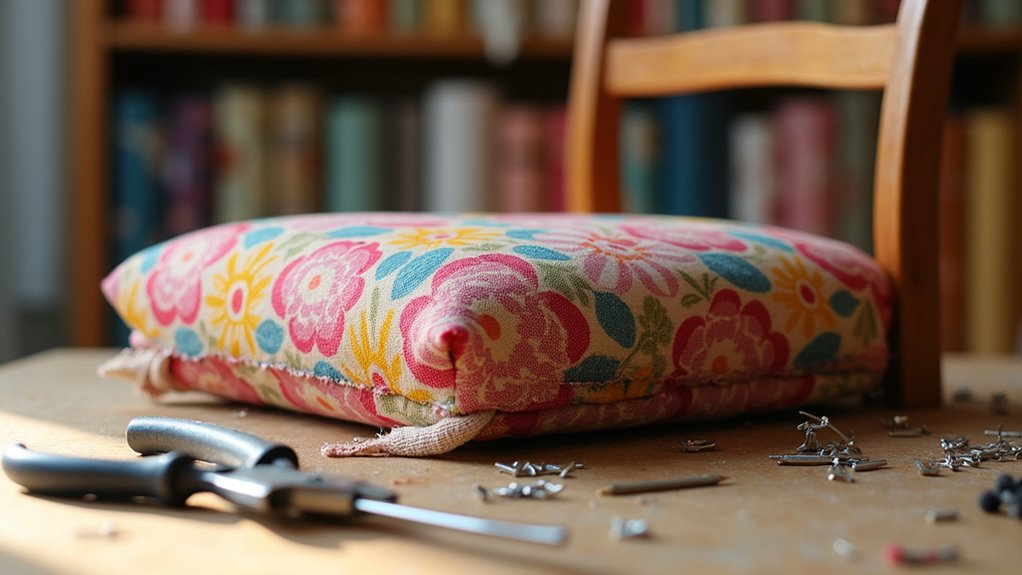
Your chair is ready for the next step. Time to remove the old fabric! Start by flipping your chair upside down. This gives you access to the screws that hold the seat. Carefully take them out and keep them safe. You don’t want to lose them later!
Next is staple removal. Use a staple remover or a wedge tool to lift each staple gently. If any staples break, use needle-nose pliers to pull them out. Watch your feet! Dropped staples can hurt. Remember to wear personal protective equipment like safety goggles during this process for added protection. When removing the old fabric, be sure to inspect the condition of the cushioning to determine if it needs replacing. Take note that the old fabric is typically attached with staples for secure fitting. If the foam padding is worn, you may want to consider replacing foam for added comfort.
Here’s a quick reference table:
| Step | Tool Needed | Safety Tip |
|---|---|---|
| Remove Screws | Screwdriver | Keep screws in a jar |
| Remove Staples | Staple remover | Wear eye protection |
| Strip Fabric | Scissors | Clear workspace of debris |
With care and patience, you will be ready for the next step!
Replacing Padding
Replacing the padding on your dining chair seat gives your furniture a fresh look. It’s also simple to do. Follow these easy steps for a comfy seat.
- Select padding materials: High-density foam lasts longer. Polyfill feels softer. When choosing materials, consider the durability of fabric to ensure a long-lasting finish. Additionally, ensure that the foam padding is appropriately sized for optimal comfort. Choosing durable fabric is essential, especially if you have children or pets.
- Cut the foam: Make it about 3/8 inch larger than the seat base. Square edges hold better.
- Securely attach the padding: Use spray adhesive on both the foam and the wooden seat. Press down evenly to avoid bubbles.
- Add comfort layers: Place low-density foam on top. Wrap with batting for a cozy finish. Transferring seats from cheap chairs can also enhance the overall look and comfort of your dining chairs.
Enjoy your newly updated dining chair!
Preparing the Fabric
Preparing your fabric is like setting up for a great show. It’s all about getting ready for the big moment! Choose strong fabrics like microfiber or leather. These materials can handle daily use without falling apart.
Lay the fabric face down and smooth out any wrinkles. A bumpy chair isn’t fun for anyone! For patterned fabric, make sure the designs align perfectly. It’s like fitting pieces of a puzzle together. Additionally, remember to measure the fabric to ensure you have enough for folding and stapling. This ensures that you have enough fabric to pull it tightly around the edges for a secure fit.
Cut your fabric with an extra 4 inches on each side. This extra will help you wrap it around the edges.
Here’s a helpful tip: spray the fabric lightly with protection, like Scotchgard. This helps resist stains. Spilled ketchup? No problem! The stain can disappear quickly.
Once everything is ready, it’s time to start stapling and transform that chair! Reupholstering dining room chairs is a rewarding project that can breathe new life into your space. Great job getting this far!
Attaching New Fabric
Get your fabric ready! Now, it’s time to attach it to the chair seat. This step is key for a neat and polished look.
Follow these simple steps:
- Position the Fabric: Place the fabric on the seat. Make sure it aligns well with the design.
- Pull Fabric Taut: Stretch the fabric tight. This helps avoid wrinkles. Keep the pattern looking good!
- Use the Right Staple Technique: Start stapling from the middle. Work your way out and space staples 2-3 inches apart. Make sure to check the condition of the foam padding before adding the fabric for a comfortable seating experience. It’s important to cut new foam to size if the existing padding is worn out.
- Mind the Corners: Fold the fabric diagonally at the corners. Staple them down securely.
Check the fabric tension often. This keeps everything smooth and neat. Remember to use a staple gun for attaching the fabric securely.
With some patience and these tips, you’ll create a beautiful dining chair ready for use. Happy stapling!
Frequently Asked Questions
How Long Does Reupholstering a Dining Chair Typically Take?
Reupholstering a dining chair takes between 1 to 14 hours. The time depends on how complex the project is. Factors like fabric type, chair design, and your skill level matter too. For simpler projects, you can finish much faster. Just remember, the right tools and a clear plan can help you save time. Enjoy your project!
Can I Use Any Type of Fabric for Dining Chairs?
Not all fabrics work for dining chairs. You need strong and easy-to-clean materials. Think about spills and wear. Fabrics like microfiber, leather, or polyester are great choices. They resist stains and last longer. Cotton blends can also work, but make sure they are treated for durability.
Avoid delicate fabrics like silk or velvet. They can easily get damaged. Choose fabrics that feel comfortable too. Softness matters when you sit for meals. Remember, your dining chairs should look good and be practical for daily use. This way, they will serve you well for years.
Is Professional Reupholstery Worth the Cost Compared to DIY?
Professional reupholstery can be expensive. Yet, it brings high quality and fast results. Skilled workers handle the job well. They know the right materials and techniques.
DIY reupholstery saves money. You can feel proud of your work. But it takes time and practice. You need to have some skills to do it right. Mistakes can happen, leading to extra costs.
Think about what you want. Do you want a perfect finish? Choose professional help. Want to save money and try something new? Go for DIY. Each choice has its pros and cons. Consider what fits your needs best.
What Tools Are Essential for Reupholstering?
Reupholstering furniture is fun and rewarding. You need a few essential tools for the job. A staple gun is a must. It holds the fabric tight. Upholstery foam adds comfort. Scissors help cut fabric neatly. A flathead screwdriver makes removing old staples easy.
Don’t forget a measuring tape for accuracy. A hammer can help with stubborn staples. A fabric marker is handy for marking cuts. A needle and thread might be needed for small repairs.
These tools make reupholstering smoother. With the right gear, you can transform your furniture. Enjoy the process and see your creativity shine!
How Do I Choose the Right Fabric Color and Pattern?
Choosing fabric color and pattern is important. Think about how the colors make you feel. Bright colors bring energy. Soft, neutral colors create calm.
Durability matters too. Pick fabrics that can handle wear and tear. Consider your home’s style. Match the fabric to the look you want.
Patterns can add fun. Stripes or florals can change the whole vibe. Keep your space in mind. The right choice will make your room feel just right.
Conclusion
You’ve reupholstered your dining chair, giving it a brand new look! It feels great to breathe new life into old furniture. With some hard work and creativity, you’ve made something special. Every time you sit down, remember your effort. Spilled ketchup? Just a small reminder of your journey. Now, get ready for your next project. Let your creativity shine bright!