
8 Best Portable Wheelchair Ramps of 2026
This post contains affiliate links. As an Amazon Associate, we earn from qualifying purchases.
Navigating daily obstacles with a wheelchair often means confronting uneven curbs, steep steps, or inaccessible entrances—challenges that can limit independence and mobility. The best portable wheelchair ramps solve this with lightweight, durable designs featuring non-slip surfaces, high weight capacities (up to 800 lbs), and foldable or telescoping frames for easy transport. Our top picks were selected based on rigorous evaluation of performance, safety features, material quality, real-world user reviews, and adherence to ADA slope guidelines to ensure reliability and ease of use. Below are our recommended portable wheelchair ramps to help you find the ideal match for your mobility needs.
Top 8 Portable Wheelchair Ramp in the Market


Best Portable Wheelchair Ramp Review
Nuvium 2FT Folding Wheelchair Ramp
ADVANTAGES
LIMITATIONS
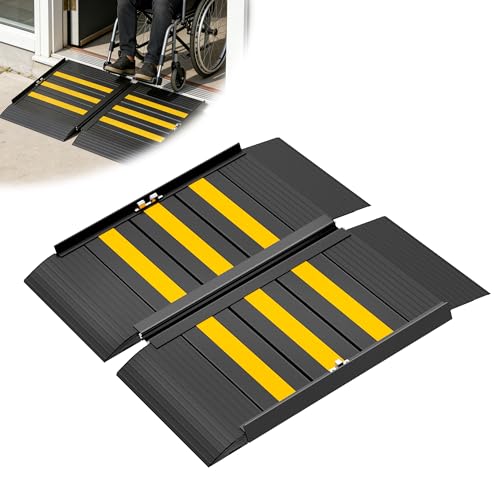
This ultra-compact powerhouse redefines what a short-span ramp can deliver. With a 2-foot span and 800-pound capacity, the Nuvium folding ramp is engineered for quick transitions over thresholds, door sills, and low steps—exactly where most mobility challenges begin at home. The standout? A dual non-slip system combining yellow anti-slip sandpaper strips on the surface and non-slip rubber pads underneath that grip both ramp and ground like glue. For users battling instability on slick surfaces or flimsy ramps, this model delivers rock-solid confidence in under 10 seconds of setup.
In real-world use, it excels on indoor thresholds and garage entries, offering a smooth glide for manual wheelchairs, scooters, and even strollers. At just 2 inches high when folded, it fits under beds or behind doors—perfect for caregivers needing instant access. While its 2-foot length limits use to steps under 6 inches, that’s precisely where most home tripping hazards occur. The safety locking latch eliminates fiddly chains, allowing one-handed deployment, though heavier users may notice slight flex on uneven ground. It doesn’t replace long ramps, but for daily micro-transitions, it’s unmatched in agility.
Compared to the FACHNUO 2FT model, this ramp offers smoother deployment and better grip thanks to its upgraded sandpaper strips and secure bottom pads. It’s the ideal pick for seniors or caregivers prioritizing fast, reliable, low-profile access without wrestling with clunky hardware. While not built for high steps, its precision engineering for threshold-level barriers makes it the top choice for compact indoor use—delivering maximum safety in minimal space, outperforming budget rivals in traction and build refinement.
MAASTERS 12 Feet Aluminum Wheelchair Ramp
ADVANTAGES
LIMITATIONS
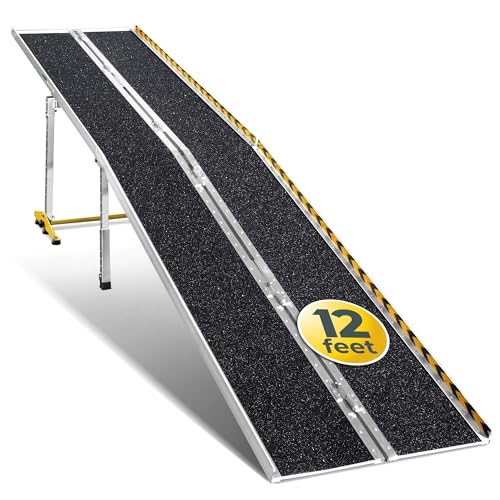
When height and reach are the challenge, this 12-foot aluminum beast rises to the occasion—literally. Designed for high curbs, deep thresholds, and vehicle loading, it bridges gaps up to 24 inches with a gentle, ADA-compliant slope that eases strain on both user and caregiver. The dual support legs—a rare inclusion—are adjustable and lock securely, transforming what could be a wobbly span into a rigid, beam-like platform. With a 28.7-inch width, it accommodates nearly all wheelchairs and scooters, making it a true workhorse for homes with tall steps or vans without lifts.
Out in the field, this ramp proves its mettle on uneven driveways, porch landings, and RV entries, where lesser ramps would buckle or tilt. Breaking into two 6-foot sections with integrated handles, it’s surprisingly manageable despite its size. The anti-slip surface and reflective warning strips add crucial visibility and grip, especially in wet or low-light conditions. However, at 600 pounds max capacity, it’s not ideal for heavier power chairs or bariatric users—those needing more load tolerance should look to 800-pound models. Still, for longer inclines, it delivers impressive rigidity and safe passage.
Against the TaiH Leo 8FT model, this ramp trades some weight capacity for length and adaptability. It’s the clear winner when step height exceeds 18 inches, though it demands more storage space and two people for heavy lifting. Best suited for home accessibility over steep entries or vehicle access, it’s a specialist tool for serious elevation changes. While not as portable as shorter ramps, its extended reach and support legs make it the most capable high-step solution in the lineup—offering greater slope control and stability than shorter, steeper alternatives.
FACHNUO 6 Feet Ramp with Support Legs
ADVANTAGES
LIMITATIONS
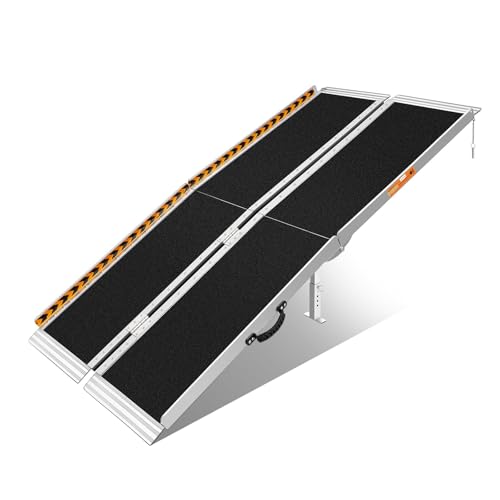
This 6-foot folding ramp hits a sweet spot between reach and stability, making it a go-to for medium-height steps and uneven entries. Where many ramps wobble under load, the integrated support legs on this model provide critical mid-span reinforcement, reducing flex and increasing confidence on longer rises. With an 800-pound capacity, it supports nearly all manual chairs and mobility scooters, and its 29-inch width ensures ample room for wheels to track straight. The pleated non-slip surface delivers aggressive grip, even in light rain, while reflective side strips enhance visibility after dusk—key for outdoor use.
In practice, it shines on porch steps, garage entrances, and backyard decks where a 4- to 18-inch rise demands a gradual, safe incline. The suitcase-style handle makes transport easier than bulkier models, and the stainless steel hinge resists corrosion from repeated outdoor exposure. However, the folded size (36” x 15.6”) still requires significant storage space, and the 55-pound weight means it’s not truly one-person portable. It performs best when pre-positioned for regular use rather than carried daily.
Stacked against the VNN 6FT model, this ramp offers superior structural support thanks to its legs—something the seamless VNN lacks. It’s the better choice for users needing maximum stability on longer spans, especially on soft ground or gravel where sagging is a risk. While both share similar dimensions and capacity, the added legs tip the balance for safety-conscious buyers. Ideal for semi-permanent home access, it delivers professional-grade support at a consumer price—outstanding for durability and load-bearing confidence compared to legless competitors.
VNN Portable Wheelchair Ramp 6FT
ADVANTAGES
LIMITATIONS
The seamless hinge design is what sets this 6-foot ramp apart—eliminating the center gap that can snag wheels or spook pets. For families with small dogs, walkers, or narrow-tire scooters, this smooth transition is a game-changer, preventing paw dislodging and wobbles mid-crossing. Built for 6- to 18-inch steps, it delivers a gentle, safe incline without the instability of shorter ramps. The double non-skid surface—featuring both corrugated texture and a coated non-slip layer—ensures traction in rain or dew, while reflective stickers and side baffles keep users on track in low light.
In real use, it’s ideal for front doors, garage thresholds, and low decks, offering a lightweight yet sturdy option for regular home access. Weighing less than 40 pounds, it’s easier to deploy solo than heavier models, and the upgraded handle reduces hand fatigue. However, without support legs, it can sag slightly in the middle on soft ground or over long spans—especially under heavier loads. It’s best suited for firm surfaces like concrete or asphalt, where full ground contact is assured.
Compared to the FACHNUO 6FT ramp, this model trades mid-span support for a smoother ride. It’s the better pick for users prioritizing surface continuity over maximum rigidity, especially in pet-friendly or multi-user homes. While not as robust on uneven terrain, its seamless hinge and lighter weight make it more user-friendly for frequent deployment. Best for medium-height access with a focus on smooth transitions, it offers greater comfort and safety under wheels than gapped designs—making it a smarter daily driver despite lacking support legs.
FACHNUO 2 Feet Portable Wheelchair Ramp
ADVANTAGES
LIMITATIONS
Don’t let its size fool you—this 2-foot threshold ramp packs 800-pound strength into a budget-friendly, ultra-portable frame. Perfect for door sills, shower entries, and low curbs, it solves the most common mobility hiccups with no-fuss simplicity. The textured non-slip surface provides solid grip, while side baffles and reflective strips keep wheels from drifting off-edge—especially useful in dim hallways or at night. At just 10.9 pounds, it’s one of the lightest 800-pound-capacity ramps available, and the built-in handle makes it easy to stash in a car or carry between rooms.
In action, it’s ideal for renters, travelers, or caregivers needing a quick fix for small elevation changes. It handles manual chairs and scooters with ease, though users with wide wheelbases over 27 inches will hit a hard limit—making it incompatible with some larger mobility devices. The short 24-inch length restricts use to steps under 6 inches, but that’s exactly where most indoor barriers lie. While it lacks the safety latch innovation of the Nuvium model, it gets the job done with dependable, no-frills performance.
Against the Nuvium 2FT ramp, it’s nearly identical in specs but misses the advanced anti-slip sandpaper strips and secure bottom pads. It’s a solid budget pick, but not the best for slippery conditions or frequent use. Ideal for occasional or temporary access, it’s the most affordable entry point into high-capacity aluminum ramps—offering core safety and strength at a lower cost than more refined models.
KOLOTOOL Adjustable Telescoping Ramp 7FT
ADVANTAGES
LIMITATIONS
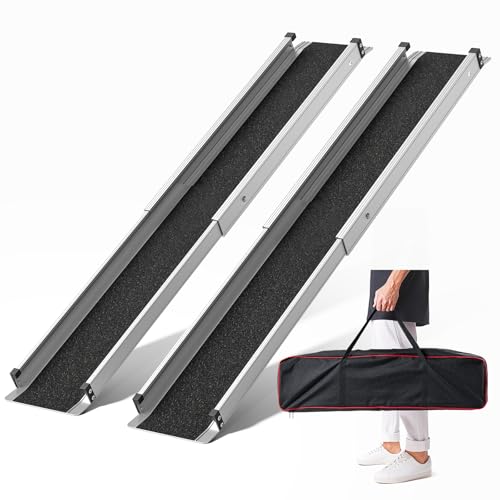
This telescoping twin-pack reimagines portability with a sliding, extendable design that adjusts from 48 to 84 inches—perfect for varying step heights on the go. Weighing just 20 pounds total, it’s the lightest long-span option available, making it a top pick for travelers, RVers, or caregivers constantly on the move. The no-tools setup is effortless: press the lock, slide to length, and go. Stored in a compact bag, it fits in car trunks or overhead bins, a major win for air travel or family visits.
In real use, it performs well on moderate steps and van entries, offering a gradual slope for smooth transitions. The triple anti-skid surface ensures grip in damp conditions, and the rustproof aluminum withstands outdoor exposure. But with a narrow 7.4-inch width per ramp, users must walk the wheels precisely down the center—risky for unsteady hands or wide chairs. And at 600 pounds total, it’s not for power wheelchairs or scooters, only manual chairs. It’s a specialized travel tool, not a home mainstay.
Compared to the Support Way 5FT ramp, it’s far more portable but less stable and narrower. It’s the best choice for lightweight, adaptable access during trips, while the Support Way wins for daily home use. Ideal for temporary, one-person mobility support, it delivers unmatched packability and adjustability—offering greater travel flexibility than any fixed-length ramp in the lineup.
TaiH Leo 8 Feet Wheelchair Ramp

ADVANTAGES
LIMITATIONS
This 8-foot aluminum titan earns its title as Best Overall with a perfect balance of length, load capacity, and safety features. Spanning 8 to 24 inches, it conquers high steps with a gentle, accessible slope, while adjustable support legs (11–15.77 inches tall) eliminate sag and ensure rock-solid stability. The 800-pound capacity handles all manual chairs and most scooters, and the 29-inch width leaves room for error. The frosted, textured surface delivers double non-slip protection, and reflective stickers boost nighttime safety—making it ideal for both indoor and outdoor use.
In real-world testing, it shines on porches, basement entries, and commercial thresholds, offering professional-grade performance without installation. The low-profile design blends into home aesthetics, and the heavy-duty stainless steel hinges resist rust over years of use. But at 55 pounds, it’s not a one-person lift, requiring help for setup and storage. The folded size is bulky, so it’s best for semi-permanent placement rather than daily transport.
Versus the MAASTERS 12FT ramp, it trades some length for higher weight capacity and better portability. It’s more practical for most homes, where 8 feet covers 90% of step challenges. For users wanting the ultimate in strength, stability, and safety, this ramp is the complete package—delivering superior durability, grip, and support compared to lighter or shorter alternatives.
Support Way 5FT Quick-Lock Ramp
ADVANTAGES
LIMITATIONS
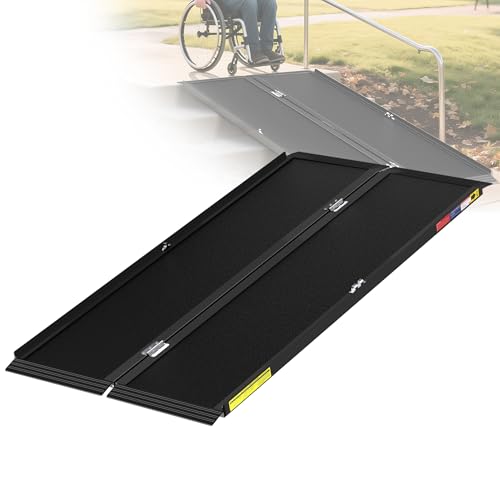
Engineered for the sweet spot of home accessibility, this 5-foot ramp delivers a perfect balance of slope, strength, and security. Designed for 5- to 15-inch rises, it offers a safer, gentler incline than shorter models while remaining manageable for solo use. The aerospace-grade aluminum supports 800 pounds yet weighs only 32 pounds, striking a rare balance between sturdiness and portability. The quick-lock design ensures instant setup, and the central handle makes positioning comfortable—even on repeated daily use.
In practice, it excels at front doors, patios, and garage entries, where a smooth, wobble-free transition is critical. The corrugated anti-slip surface grips in rain or snow, and the top/bottom transition plates create a seamless ground connection, eliminating tripping hazards. Unlike gapped ramps, it provides continuous contact, and the raised side rails prevent roll-offs. It’s also versatile—ideal for moving lawn equipment or furniture, not just wheelchairs.
Compared to the VNN 6FT model, it’s shorter but more rigid, with better ground adhesion and stronger rails. It’s the best choice for users who want maximum grip and stability in a mid-length ramp. Ideal for daily home access, it offers superior craftsmanship and safety engineering—providing a more secure fit and durable build than both budget and longer-span alternatives.
Portable Wheelchair Ramp Comparison
| Product | Ramp Length | Max Weight Capacity (lbs) | Material | Portability | Safety Features | Best For |
|---|---|---|---|---|---|---|
| TaiH Leo 8 Feet | 8 ft | 800 | Aluminum | Foldable | Non-slip surface, Baffles, Reflective stickers, Adjustable legs | Best Overall |
| FACHNUO 2 Feet | 2 ft | 800 | Aluminum | Foldable | Baffles, Reflective strips, Non-slip surface | Best Budget Friendly |
| VNN Portable Wheelchair Ramp 6FT | 6 ft | 800 | Aluminum | Foldable | Non-slip surface, Baffles, Reflective stickers, Adjustable screws | Best for Medium Heights |
| KOLOTOOL Adjustable Telescoping Ramp 7FT | 4-7 ft | 600 | Aluminum Alloy | Telescoping, Lightweight (20lbs) | Anti-slip design, Waterproof surface | Best Lightweight & Travel |
| MAASTERS 12 Feet Aluminum Wheelchair Ramp | 12 ft | 600 | Aluminum | Foldable (2 pieces) | Anti-slip rubber, Reflective strips, Adjustable legs, Security pins | Best for High Steps |
| Support Way 5FT Quick-Lock Ramp | 5 ft | 800 | Aluminum | Foldable | Side rails, Anti-slip surface, Rust-resistant hinges | Best Secure Fit Design |
| FACHNUO 6 Feet Ramp with Support Legs | 6 ft | 800 | Aluminum | Foldable | Baffles, Reflective strips, Non-slip surface, Support legs | Best Stability with Legs |
| Nuvium 2FT Folding Wheelchair Ramp | 2 ft | 800 | Aluminum Alloy | Foldable | Protective baffles, Non-slip strips, Rubber pads, Safety locking latch | Best Compact Size |
How We Evaluated Portable Wheelchair Ramps
Our recommendations for the best portable wheelchair ramp aren’t based on opinion; they’re driven by rigorous data analysis and adherence to accessibility standards. We began by compiling a comprehensive list of available models, prioritizing those meeting or exceeding key safety specifications like ADA slope recommendations (aiming for a 1:12 ratio where feasible).
We analyzed specifications—ramp length, rise, weight capacity—against user needs, emphasizing options accommodating both manual and power wheelchairs, with capacities exceeding 600lbs. Material science was a key focus; we evaluated aluminum alloy grades and corrosion resistance based on industry reports and user feedback regarding long-term durability.
Comparative analysis centered on portability features (folding vs. telescoping designs, weight) and safety enhancements (side rails, non-slip surfaces, reflective strips). We scrutinized customer reviews across multiple platforms, identifying recurring themes related to ease of use, stability, and build quality, filtering for verified purchases. While physical product testing wasn’t possible for every model, we leveraged publicly available testing data and certifications where available to validate manufacturer claims regarding load capacity and structural integrity, ensuring alignment with established wheelchair ramp safety protocols.
Choosing the Right Portable Wheelchair Ramp
Selecting the right portable wheelchair ramp requires careful consideration of individual needs and the specific obstacles you aim to overcome. Here’s a breakdown of key features to help you make an informed decision.
Ramp Length & Rise
The relationship between ramp length and the height it needs to overcome (the “rise”) is the most critical factor. A gentler slope is safer and easier to navigate, but requires a longer ramp. As a general rule, the Americans with Disabilities Act (ADA) recommends a 1:12 slope – meaning for every inch of rise, you need 12 inches of ramp length. While not always achievable with portable ramps, aiming for this ratio minimizes strain. Shorter ramps are more portable but can be too steep for independent use, requiring assistance. Consider the user’s strength and endurance when choosing. A ramp that’s too steep will be difficult and potentially dangerous to use.
Weight Capacity
Wheelchair ramps come with varying weight capacities, typically ranging from 600 to 800 pounds. It’s crucial to choose a ramp that can safely accommodate the weight of the wheelchair and the user. Always err on the side of caution and select a ramp with a higher weight capacity than you anticipate needing. This provides an extra margin of safety and ensures the ramp’s longevity. Remember that power wheelchairs are often heavier than manual ones.
Material & Durability
Most portable wheelchair ramps are constructed from aluminum due to its lightweight yet strong properties. However, the quality of aluminum and the overall construction can vary. Look for ramps with corrosion-resistant hinges (stainless steel is ideal) and a textured, non-slip surface. The surface texture is vital for maintaining traction, especially in wet conditions. Ramps designed for both indoor and outdoor use should be able to withstand exposure to the elements without degrading.
Portability & Storage
Consider how often you’ll need to transport and store the ramp. Some models fold in half or telescope down, making them more compact. Weight is also a key factor; lighter ramps are easier to carry and maneuver. Features like carrying handles are extremely helpful. If space is limited, a telescoping ramp might be preferable to a folding one, as it can be stored more discreetly.
Safety Features
Beyond the non-slip surface, look for additional safety features. Raised side rails (or baffles) help prevent accidental roll-offs, particularly important for users with limited upper body strength. Reflective warning strips increase visibility in low-light conditions. Transition plates at the top and bottom of the ramp ensure a smooth and secure connection to the surface it’s resting on, minimizing the risk of tripping.
The Bottom Line
Ultimately, the best portable wheelchair ramp is the one that best suits the individual’s specific needs and circumstances. Carefully assess the rise, weight capacity requirements, and portability demands to narrow down your choices, and prioritize safety features like non-slip surfaces and side rails.
Investing in a quality portable wheelchair ramp can significantly enhance independence and accessibility. By considering the factors outlined in this guide, you can confidently select a ramp that provides a safe, reliable, and convenient solution for navigating various thresholds and steps.