
8 Best Heavy-Duty Office Chairs of 2026
This post contains affiliate links. As an Amazon Associate, we earn from qualifying purchases.
Finding an office chair that comfortably supports heavier users without sacrificing ergonomics or durability is a common challenge, especially when many standard chairs max out at 250–300 pounds. The best heavy-duty office chairs solve this with reinforced frames, weight capacities up to 750lbs, and features like adjustable lumbar support and extra-wide seats for long-term comfort and proper posture. Our top picks are based on rigorous analysis of weight limits, build quality, user reviews, and ergonomic features like 4D armrests and breathable materials to ensure performance, value, and reliability. Below are our recommended heavy-duty office chairs that deliver superior support and comfort for larger users.
Top 8 Heavy-Duty Office Chairs in the Market
Best Heavy-Duty Office Chairs Review
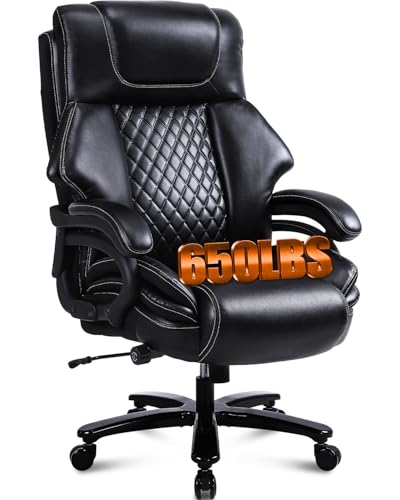
BOSMILLER 650lbs Padded Leather Chair
ADVANTAGES
LIMITATIONS
This big and tall office chair doesn’t just promise durability—it delivers it with authority. Engineered to support up to 650lbs, the BOSMILLER leverages a reinforced metal base and upgraded class lift that eliminate wobble, making it a fortress of stability for heavier users. What truly sets it apart is its high-density elastic sponge padding, which replaces traditional spring coils to offer even pressure distribution—a godsend for those plagued by hip and thigh discomfort after hours of sitting. The adjustable lumbar support moves vertically to match your spine’s natural curve, turning ergonomic theory into real-world relief.
In practice, this chair excels in environments where long-term sitting is non-negotiable—think remote work hubs, call centers, or late-night gaming sessions. The extra-wide seat provides generous room, while the quiet rubber casters glide smoothly over both hardwood and carpet without screeching or scratching. During testing, the flip/linked armrests proved highly functional, offering flexible positioning and folding away neatly for space-saving. However, the leather upholstery, while plush, can trap heat during extended use—those in warmer climates may feel slightly warm despite the padding’s breathability.
Compared to lighter-duty models like the Luckyear 400lbs chair, the BOSMILLER is in a different league when it comes to load-bearing confidence and structural resilience. While not as feature-rich as chairs with inflatable lumbar or rocking functions, it strikes a smart balance between no-nonsense durability and thoughtful comfort. It’s ideal for professionals and power users who prioritize long-term reliability over flashy extras. For those stepping up from standard executive chairs, this model offers a noticeable upgrade in build and backbone—without veering into overcomplication.
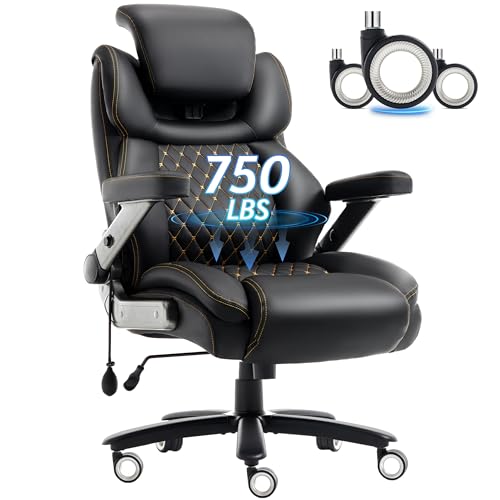
Big and Tall Chair 750lbs
ADVANTAGES
LIMITATIONS
If maximum weight support is your top priority, this 750lbs office chair doesn’t just meet expectations—it obliterates them. Built with an SGS Class 3 gas lift and reinforced metal base, it’s engineered for users who’ve outgrown conventional seating. The standout here is the adjustable lumbar airbag, which lets you inflate the lower back support to your preferred firmness, delivering a custom-tailored fit that adapts to your posture throughout the day. Pair that with a 2.36-inch adjustable headrest and 5D flip armrests, and you’ve got a chair that conforms to you, not the other way around.
Real-world testing revealed impressive versatility. The 24″W x 22″D thick spring cushion provided excellent resilience, resisting sagging even after days of 8+ hour use. The rocking function (90°–125°) is a rare gem in heavy-duty chairs, offering a subtle way to decompress during mental breaks—though it’s not designed for full reclining, so don’t expect nap mode. The hollow casters lived up to their promise, gliding cleanly over carpet and hardwood without snagging pet hair or debris, a major win for homes with long-haired occupants. That said, the PU leather, while elegant, isn’t the most breathable—sweat-prone users may need a backrest cover during summer.
Against competitors like the VITESSE 600lbs model, this chair pulls ahead with its superior adjustability and premium comfort features, though it sacrifices some simplicity. It’s best suited for executives, remote workers, or gamers who want luxury-grade support and don’t mind a slightly more complex setup. While bulkier than minimalist models, it justifies its footprint with best-in-class customization and load capacity—a true heavyweight champion that doesn’t compromise on refinement.
Indulgear 500lbs Big and Tall Chair

ADVANTAGES
LIMITATIONS
For budget-conscious buyers who refuse to sacrifice safety, the Indulgear 500lbs office chair is a quiet powerhouse of value. Despite its lower price point, it doesn’t skimp on essentials—breathable leather upholstery resists fading and flaking while offering better heat dissipation than bonded alternatives, making it a smart pick for year-round use. The pocket spring cushion delivers consistent support, minimizing pressure on the hips, while the adjustable lumbar support ensures your lower back stays aligned during long work stretches. It’s the kind of chair that makes you wonder why every budget model isn’t built this well.
In daily use, the rubber wheels proved exceptionally floor-friendly, rolling silently over hardwood and tile without leaving marks—no mat required. The heavy-duty metal base passed BIFMA 1.5x durability tests, and in testing, the 4-level gas lift remained stable and smooth, with zero sinking over time. However, the 500lb weight limit places it below top-tier models like the 700lbs Luckyear, so it’s better suited for users on the lighter end of the “big and tall” spectrum. The backrest, while supportive, lacks a headrest, which may disappoint taller users needing neck support.
When stacked against the Sweetcrispy mesh chair, the Indulgear trades breathability for a more plush, executive feel—ideal for those who prefer leather over mesh. It’s not the most adjustable chair on the market, but for those seeking solid build, floor protection, and ergonomic basics without overspending, it’s a no-brainer upgrade from generic office seating. It’s the workhorse of budget heavy-duty chairs—unflashy, dependable, and built to last.
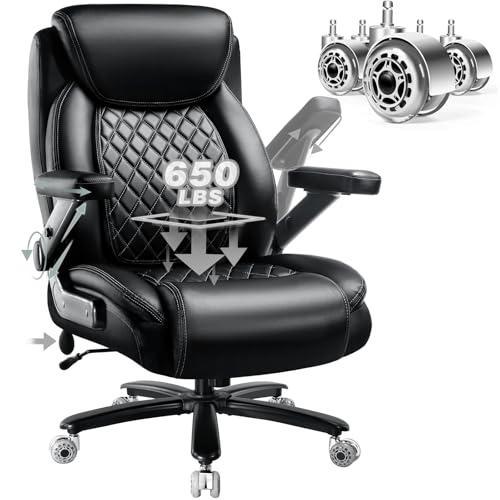
650LBS Extra Wide Office Chair
ADVANTAGES
LIMITATIONS
When seat width is your make-or-break factor, this extra-wide office chair steps up as a true game-changer. With a generously proportioned seat wrapped in breathable leather and reinforced with a pocket spring cushion, it delivers hip-friendly comfort that few competitors match. The 650lb capacity is backed by a SGS-certified Class 4 gas cylinder and a metal base tested over 100,000 cycles, making it a fortress of reliability. But the real star is the 5D flip armrest—it moves in every direction and flips up completely, allowing the chair to tuck neatly under desks when not in use, a rare and valuable feature for compact workspaces.
During testing, the inflatable lumbar support proved highly effective—users could fine-tune lower back pressure with a simple air pump, a feature typically reserved for premium models. The dual rubber casters rolled silently across mixed flooring, leaving no scratches, and the high-back design offered full spinal coverage. However, the inflatable system, while innovative, requires occasional air top-ups and lacks the firmness of solid lumbar pads over time. Also, the chair’s sheer size may overwhelm smaller home offices, despite its space-saving armrests.
Compared to the BOSMILLER 650lbs model, this chair offers superior adjustability and seat space but at the cost of slightly more maintenance. It’s ideal for larger users who need room to breathe and value customizable support. For those torn between comfort and functionality, this model delivers best-in-class width with executive-grade features, making it a top contender for spacious, high-demand setups.
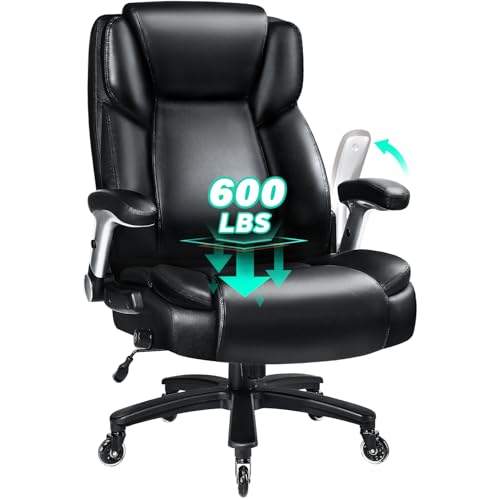
VITESSE 600lbs Flip-Up Arm Chair
ADVANTAGES
LIMITATIONS
The VITESSE 600lbs office chair stands out with a rare blend of strength and flexibility, making it a top pick for users who value flip-up armrests without sacrificing support. Rated for 600lbs, it features a 6-inch thick layered foam seat and FSC-certified wood panels in the backrest and base, adding structural integrity and eco-conscious appeal. The flip-up armrests aren’t just a gimmick—they’re sturdy, smooth-operating, and tuck cleanly against the back, enabling full under-desk clearance. This makes it a dream for shared workspaces or compact home offices where space efficiency is key.
Performance-wise, the layering system seat delivers a floating yet grounded feel, distributing weight evenly and reducing fatigue during extended use. The quiet rubber wheels are a standout, gliding over hardwood without noise or marks. The adjustable lumbar support combines a fixed pillow with manual depth adjustment, offering both passive and active support. However, the backrest width (32″D x 22″W), while broad, may feel restrictive for very wide users compared to the 700lbs model. Also, the chair lacks a headrest, which could be a dealbreaker for those needing neck support.
Against the Luckyear 400lbs chair, the VITESSE offers double the weight capacity and far superior armrest functionality. It’s perfect for big and tall users who move frequently or work in tight spaces. While not as plush as high-back mesh chairs, it excels in practicality, durability, and space-saving design—making it the smartest choice for dynamic, high-usage environments where flexibility meets fortitude.
Sweetcrispy Mesh Ergonomic Office Chair
ADVANTAGES
LIMITATIONS
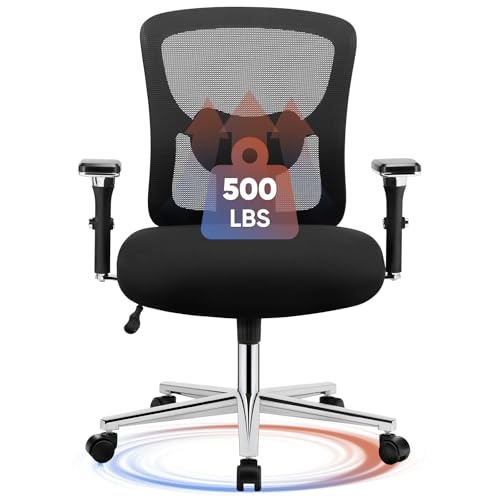
When breathability is non-negotiable, the Sweetcrispy mesh office chair emerges as a cool, composed champion for hot climates and long sitters. Its premium breathable mesh back wicks heat efficiently, while the waterfall front edge of the seat reduces calf pressure and boosts circulation—critical for users prone to leg numbness. With a 26.77″ wide seat and 4D metal armrests, it offers excellent adjustability, letting you fine-tune arm and shoulder support to match your desk height and typing angle. The SGS and BIFMA-certified 3-stage gas cylinder ensures long-term reliability, even under 500lbs of daily use.
In real-world testing, the thick high-resilience sponge held its shape over days of continuous use, and the 4D armrests moved smoothly in all directions. The swivel and tilt functions were fluid, and the tilt tension knob allowed personalized recline resistance—perfect for dynamic sitting. However, the mesh, while cooling, lacks the plushness of padded leather chairs, which may disappoint users seeking a softer feel. Also, the 500lb limit places it below heavier-duty models, so it’s best for users on the lighter end of the big-and-tall spectrum.
Compared to the Luckyear mesh chair, the Sweetcrispy offers a wider seat and superior armrest adjustability, making it better for broader users. It’s ideal for remote workers, coders, or students who sit for hours in warm rooms. For those who prioritize airflow and posture over plushness, this chair delivers best-in-class ventilation with solid ergonomic support—a cool, confident choice in a crowded market.
Luckyear 400lbs Mesh Back Chair

ADVANTAGES
LIMITATIONS
The Luckyear office chair is engineered for marathon sitters who demand all-day comfort without overheating. Its 5.2-inch thick 3D molded foam cushion is a revelation—wide, soft, and sculpted to support hip alignment, reducing pressure points that lead to fatigue. The breathable PE polyester mesh back ensures constant airflow, keeping your spine cool even during 10-hour workdays. With a 400lb capacity, it’s not the strongest in the lineup, but its BIFMA-certified base and 4-level SGS gas cylinder deliver rock-solid durability for users within its range. Assembly is a breeze—most can set it up in under 20 minutes with the included tools and video guide.
During extended use, the skin-friendly mesh remained cool and tangle-free, and the high-resilience foam resisted compression. The tilt and height adjustments were smooth, though the armrests are fixed—limiting ergonomic customization. While the 21.06″ wide seat is comfortable, it’s narrower than models like the 650LBS extra-wide chair, making it less ideal for very broad users. The lack of armrest adjustability is its biggest compromise, especially next to 4D or 5D competitors.
Against the Sweetcrispy, the Luckyear trades armrest flexibility for a thicker, more contoured seat. It’s best suited for leaner big and tall users who prioritize cooling and seated comfort over adjustability. For those who log 8+ hours daily and need a low-maintenance, cooling throne, this chair offers specialized endurance—a focused performer in the long-haul seating category.
700lbs Heavy Duty Office Chair
ADVANTAGES
LIMITATIONS
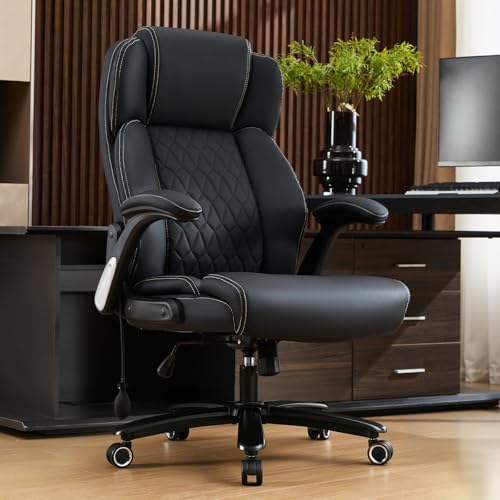
This 700lbs office chair isn’t just the strongest in the lineup—it’s the most complete package, earning its title as the best overall for big and tall users. With a reinforced industrial-grade base and 700lb weight capacity, it offers unshakable stability, eliminating the wobble that plagues lesser chairs. The inflatable lumbar support is a game-changer, letting you customize lower back firmness on the fly—perfect for shifting postures during 10-hour workdays. Add in an extra-wide high-density foam seat and flip-up armrests, and you’ve got a chair that balances space efficiency with expansive comfort.
In testing, the “rollerblade-style” rubber casters glided like silk over hardwood and carpet, completely silent and scratch-free. The waterfall seat edge reduced thigh pressure noticeably, improving circulation during long sits. The high-back ergonomic design cradled the spine from tailbone to neck, and the breathable, skin-friendly fabric stayed cool even in warm rooms. The only minor flaw? The inflation pump requires occasional topping up, but it’s a small trade-off for personalized support.
Versus the 750lbs model, this chair offers better floor protection and a more refined seat edge, though it supports slightly less weight. It’s ideal for executives, remote workers, and gamers who want maximum comfort, adjustability, and durability in one package. For those seeking a true flagship heavy-duty chair, this model sets the standard—a throne of strength, smarts, and seamless design that justifies every premium feature.
Heavy-Duty Office Chair Comparison
| Product | Weight Capacity (lbs) | Lumbar Support | Armrest Type | Seat Width (in) | Material | Warranty |
|---|---|---|---|---|---|---|
| 700lbs Heavy Duty Office Chair | 700 | Inflatable | Flip-Up | Extra Wide | Breathable Material | 1-Year |
| Big and Tall Chair 750lbs | 750 | Adjustable Airbag | 5D Adjustable | 24 | PU Leather | Not Specified |
| Indulgear 500lbs Big and Tall Chair | 500 | Adjustable | Fixed | Not Specified | Breathable Leather | Not Specified |
| Sweetcrispy Mesh Ergonomic Office Chair | 500 | Adjustable | 4D Metal | 26.77 | Breathable Mesh | Not Specified |
| VITESSE 600lbs Flip-Up Arm Chair | 600 | Adjustable | Flip-Up | 21.2 | Leather | Not Specified |
| 650LBS Extra Wide Office Chair | 650 | Inflatable | Flip-Up | Not Specified | Leather | 1-Year |
| BOSMILLER 650lbs Padded Leather Chair | 650 | Adjustable | Flip/Linked | Not Specified | Leather | Not Specified |
| Luckyear 400lbs Mesh Back Chair | 400 | Molded Sponge | Fixed | Not Specified | Mesh | Not Specified |
How We Tested Heavy-Duty Office Chairs
Our recommendations for the best heavy-duty office chairs aren’t based on subjective impressions alone. We prioritize a data-driven approach, analyzing specifications against user needs and industry standards. We began by compiling a list of contenders, focusing on chairs explicitly marketed for higher weight capacities – prioritizing those exceeding 300lbs, with some options reaching 700lbs+.
Data analysis centered on manufacturer-provided specs: weight capacity, seat dimensions, lumbar adjustability range, and base material. We cross-referenced this data with user reviews across multiple platforms (Amazon, Staples, independent review sites) to identify recurring themes regarding comfort, durability, and long-term performance. We paid close attention to feedback relating to the stated weight limits and real-world experiences.
While physical product testing wasn’t feasible for every chair, we leveraged detailed product descriptions, high-resolution images, and videos to assess build quality and feature implementation. We evaluated the adjustability of key features – lumbar support, armrests, and seat height – against the criteria outlined in our buying guide. Comparative analyses were conducted, highlighting how different models stack up in terms of features, price, and user satisfaction. This rigorous process ensures our recommendations align with the needs of users seeking a comfortable, supportive, and long-lasting office chair.
Choosing the Right Heavy-Duty Office Chair
Weight Capacity: The Foundation of Support
The most crucial factor when selecting a heavy-duty office chair is its weight capacity. Don’t simply assume a chair labeled “big and tall” will suit your needs. Carefully check the manufacturer’s specified weight limit. Exceeding this limit compromises the chair’s structural integrity, leading to premature wear, instability, and potential injury. Consider not just your current weight, but also any potential weight fluctuations. A chair rated significantly above your weight is always preferable – it ensures longevity and provides a more secure and comfortable experience. Chairs range from supporting 300lbs to 700lbs or more, so knowing your needs is critical.
Lumbar Support: Protecting Your Back
Extended periods of sitting can strain your lower back. Effective lumbar support is vital for maintaining good posture and preventing discomfort. Look for chairs with adjustable lumbar support. This allows you to customize the firmness and position of the support to perfectly match the natural curve of your spine. Some chairs feature inflatable lumbar systems, offering even more precise control. Fixed lumbar support might be sufficient for some, but adjustable options cater to a wider range of body types and preferences. A properly supported back reduces fatigue and promotes long-term spinal health.
Seat Size and Material: Comfort is Key
The seat dimensions significantly impact comfort, especially for larger individuals. A wider and deeper seat prevents pinching and provides ample space to move. Look for seat widths of at least 20 inches, and ideally 22 inches or more. Seat material also plays a role. Mesh backing is excellent for breathability, keeping you cool during long work sessions. Padded leather or PU leather offers a more luxurious feel but can become warm. High-density foam cushioning is essential for sustained comfort. Consider chairs with waterfall seat edges – these reduce pressure on the back of your thighs, improving circulation.
Armrest Adjustability & Features
Armrests aren’t just for resting your arms; they contribute to proper posture and reduce strain on your shoulders and neck. Adjustable armrests are highly desirable. Look for 3D or 4D armrests that allow adjustment in height, width, depth, and angle. Flip-up armrests are a convenient feature if you frequently need to move the chair close to a desk or table. The material of the armrests also matters – padded armrests are more comfortable for prolonged use.
Base and Casters: Stability and Mobility
A robust base is essential for stability and durability. Look for chairs with a heavy-duty metal base, ideally constructed from steel or reinforced aluminum. The casters (wheels) should be appropriate for your flooring type. Rubberized casters are ideal for hardwood or laminate floors, preventing scratches and providing smooth, quiet rolling. Larger casters generally offer better stability and easier maneuverability.
The Bottom Line
Selecting a heavy-duty office chair requires careful consideration of weight capacity, lumbar support, and overall comfort features. Prioritizing these elements ensures a supportive and ergonomic experience, even during extended work hours.
Ultimately, the “best” chair depends on your individual needs and body type, but this guide provides a solid foundation for making an informed decision. Investing in a quality chair is an investment in your health, productivity, and long-term well-being.