
How to Make an Office Chair More Comfortable
This post contains affiliate links. As an Amazon Associate, we earn from qualifying purchases.
To enhance the comfort of your office chair, begin by adjusting it so that your feet rest flat on the floor and your knees form a 90-degree angle. Ensure there’s a couple of finger’s width between your knees and the edge of the seat. Opt for breathable materials and supportive cushions for your back to maintain coziness. Incorporating a footrest or lumbar cushion can significantly improve your seating experience. For those interested in exploring further, additional tips and trends in office chairs will be discussed later in the article.
Essential Facts in 30 Seconds
- Adjust chair height for feet flat on the floor and knees at 90 degrees.
- Use a lumbar support cushion to maintain spine alignment and reduce back pain.
- Choose breathable fabric and quality foam for comfort and cooling.
- Add a footrest to support feet and improve circulation.
- Take regular breaks to reduce strain and boost productivity.
Adjusting Chair Features for Optimal Comfort
Settling into your office chair is like getting ready for a comfy movie night.
Adjust the seat height first. Your feet should rest flat on the floor. This keeps your posture good and helps blood flow. Thighs should be parallel to the floor, with knees at about a 90-degree angle. To lower the seat height, pull up on the lever while seated. Proper height adjustment significantly impacts overall comfort.
Next, focus on seat depth. Leave about 2-3 finger widths between the back of your knees and the seat. This supports better circulation.
Now, find the right backrest angle. It should match the curve of your lower back. You want support without feeling squished. A well-aligned backrest provides full back support to prevent slouching and fatigue.
Lastly, adjust the armrests. Your elbows should rest lightly at 90 degrees. This helps prevent shoulder strain.
With these changes, you’re set to work comfortably and effectively. Enjoy your time at your desk!
Choosing the Right Materials and Cushioning
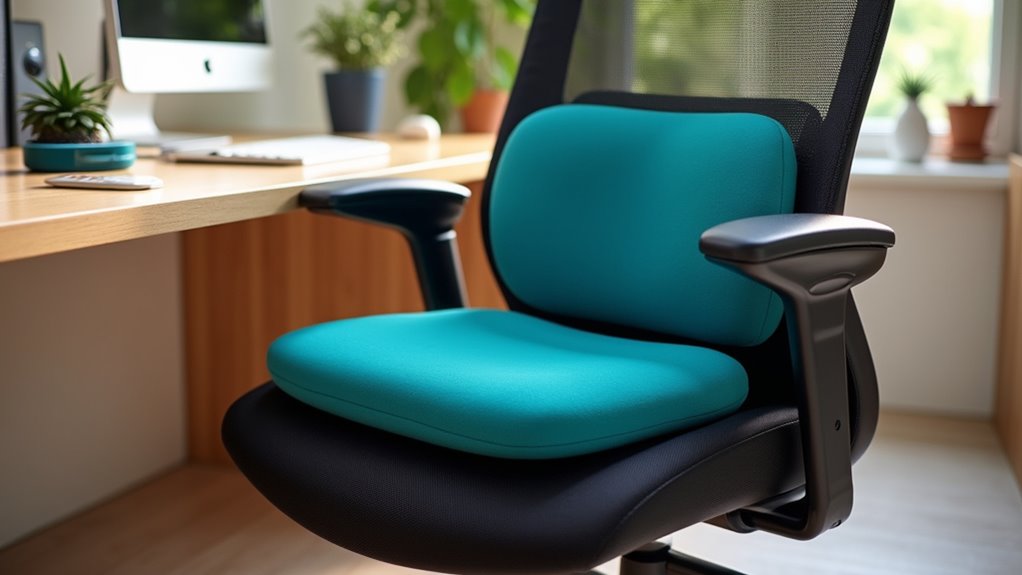
Picking the right materials for your office chair is very important. Quality foam is key. Good foam feels like a cozy pillow. Breathable fabrics, like mesh, help keep you cool. This is great for long work hours. Finding a mix of comfort and support is essential. Look for cushions that feel soft yet firm. The right fabric should also be easy to clean. Think about your style too. You want a chair that fits your space and looks good. For example, consider cushions with a foam with liquid gel core as they can help redistribute pressure while providing comfort. Additionally, ensure that the chair provides proper back support to maintain your posture throughout the day. A well-designed chair can also enhance overall comfort during long periods of use.
In addition, choosing a chair with lumbar support is crucial for promoting a healthy spine alignment.
Try out different chairs if you can. Sit in them for a while. Feel the foam and fabric. This will help you find what works best for you. A great chair keeps you comfortable and focused all day long.
Foam Cushion Quality
Finding the right foam cushion for your office chair is important for comfort. Different foam types offer various benefits. Memory foam molds to your body shape. Gel-infused foam helps keep you cool. High-density foam provides lasting support. It resists flattening and lasts longer. Molded foam adjusts to your posture for comfort during long hours, as its consistent density resists wear and maintains shape over time. Regular evaluations of your chair’s chair base can also enhance overall comfort. Low-density foam may soften too quickly and cause discomfort. A firm, high-density cushion reduces pressure points. This makes long work sessions easier. Additionally, ensure that you regularly inspect your chair to identify any maintenance issues that could affect comfort, such as a sinking mechanism. If you spill your drink, just laugh and clean it up! Regular chair maintenance, including checking for gas lift cylinder issues, can help prevent discomfort and prolong the life of your chair.
Breathable Fabric Benefits
A comfy office chair goes beyond just good padding. The fabric you pick matters a lot!
Breathable materials like mesh keep you cool. They let air flow, so no more sweaty backs during long work hours. Plus, these fabrics help keep your spine aligned. Proper cleaning techniques also ensure that the mesh maintains its breathable properties over time. The right materials can significantly contribute to overall well-being by providing necessary support during long hours of sitting.
Mesh allows heat and moisture to escape. Flexible fabrics fit your body shape for better support.
Good airflow helps you stay focused and work without distractions. Enjoy comfort and productivity with the right chair! Additionally, selecting a chair with adjustable lumbar support can further enhance your comfort and promote better posture.
Enhancing Comfort With Additional Accessories
Make your office chair feel like a cozy throne with some great accessories!
A footrest works wonders. It keeps your feet flat and supported. This helps improve circulation and cuts down on leg strain. A footrest is a lifesaver for high chairs or bad desk setups.
Lumbar support cushions are also key. They fit the natural curve of your spine. This can help reduce lower back pain during long work hours. You can find them in memory foam or adjustable styles. Choose what feels best for you.
Don’t forget a comfy seat cushion for extra padding. This is perfect for hard chair surfaces. Additionally, maintaining good posture while seated is crucial for long-term comfort and health.
With these accessories, you’ll transform your workspace into a comfort zone. Make every hour feel like a breeze! Enjoy sitting like royalty!
Tips for Maintaining Proper Posture
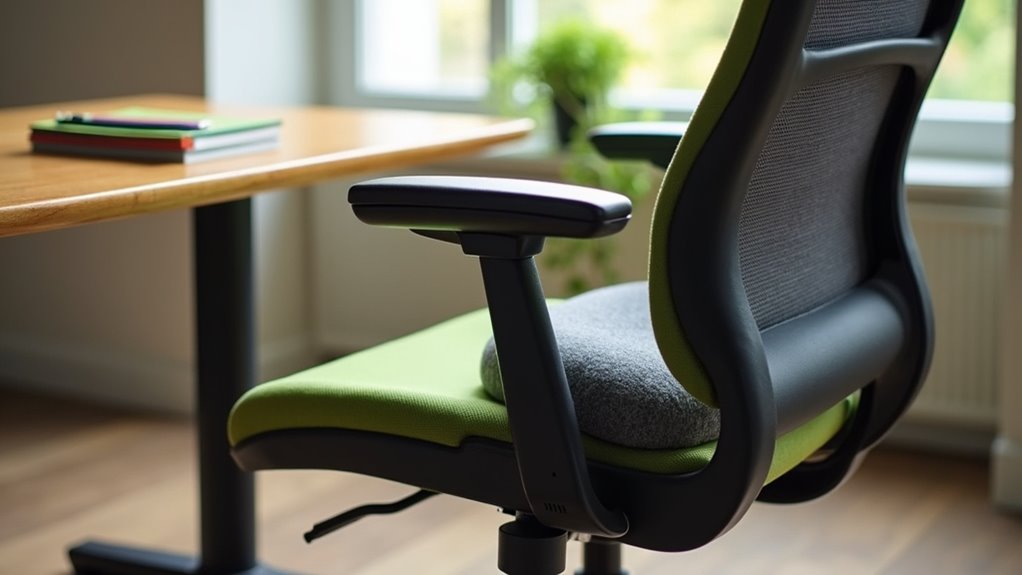
Here are some easy tips to help you sit well:
- Press your butt against the chair back. This gives your lower back support.
- Keep your feet flat on the floor or on a footrest. This prevents leg tiredness.
- Position your monitor at eye level. This stops neck strain. Regular breaks from sitting can also enhance comfort and prevent stiffness. Remember to take regular breaks to keep your body engaged and reduce discomfort.
Incorporating proper body positioning into your sitting habits can significantly improve your comfort and productivity.
Good posture helps you feel better and work better. It’s worth the effort!
Incorporating Regular Breaks and Movement
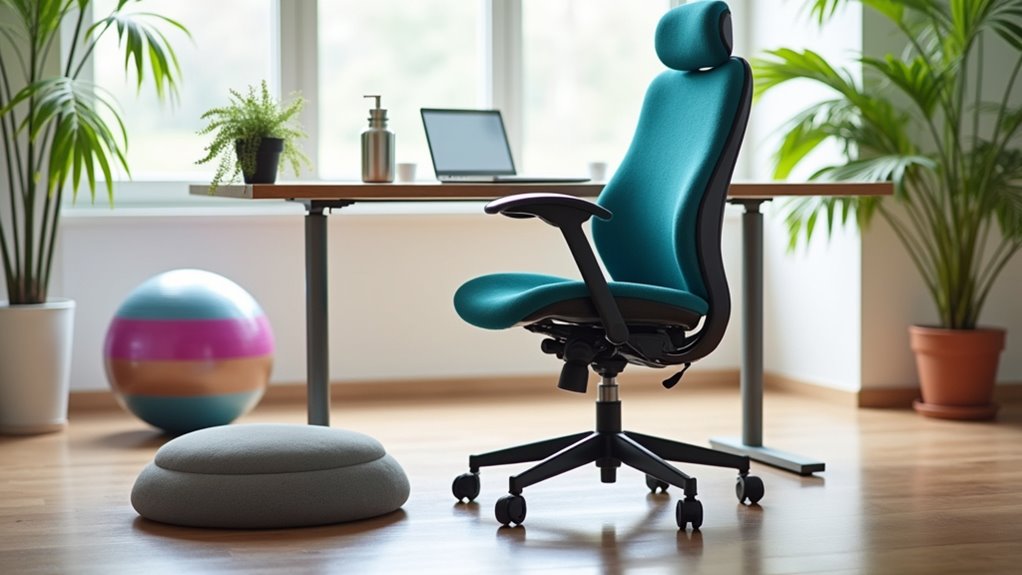
Sitting up straight is a solid start. Remember to take regular breaks and move around! Staying in one position all day isn’t good for you.
Take a quick break every hour. Just five minutes can make a big difference. Stretch your arms, wiggle your legs, or walk around the office. These breaks help reduce muscle strain and keep your blood flowing. It’s also important to distribute weight evenly to avoid discomfort during long periods of sitting.
Mix up your routine with different movements. Try using a standing desk or do mini squats. If your chair rolls easily, use that! Glide around a bit to change your posture.
Balancing sitting, standing, and moving is key. Regular breaks can significantly enhance your overall comfort and productivity. Shake it out! Your body will feel better, and you’ll tackle your tasks like a pro.
Exploring Current Trends in Ergonomic Design
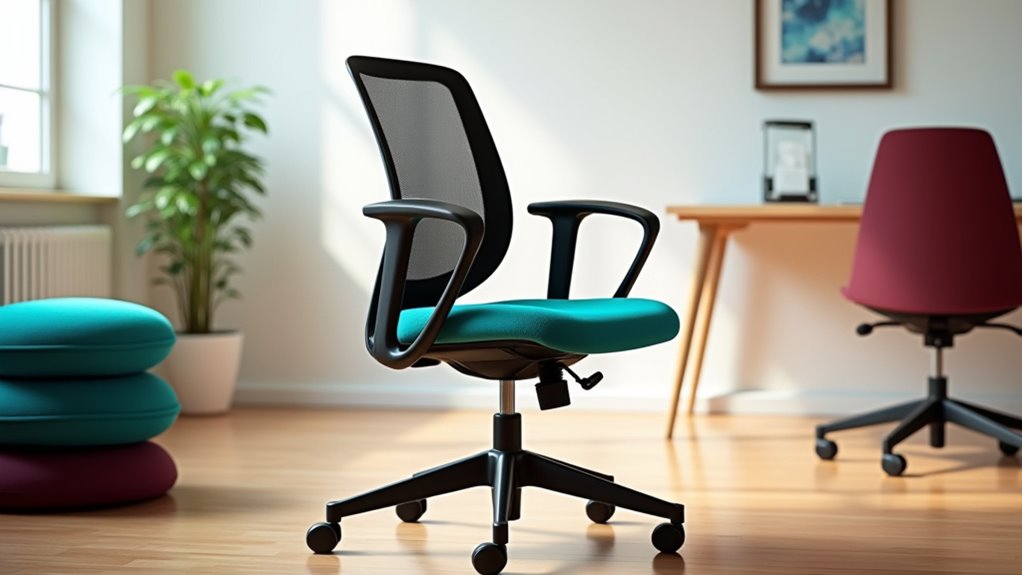
Finding the right office chair is key for comfort. You spend hours at your desk, so it needs to support you well. Current ergonomic trends focus on designs that keep you comfortable and healthy.
Look for these important features:
- Pelvic and lumbar support helps keep your spine aligned. Say goodbye to back pain! Additionally, many ergonomic chairs now incorporate gas cylinders that can easily adjust to your preferred height. Proper back support is essential for maintaining comfort throughout the day.
- Adjustable seating allows you to customize height, width, and depth. No more “one-size-fits-all” chairs!
- Movement-friendly designs encourage you to shift positions. This keeps you comfy and focused.
Incorporating regular breaks into your routine can further enhance comfort and reduce strain during long periods of sitting.
These features boost your comfort and create a happier workspace. Discover a chair that supports you like a good friend. You deserve it!
Frequently Asked Questions
How Often Should I Replace My Office Chair for Optimal Comfort?
Replace your office chair every 5 to 10 years. This change keeps comfort and support high. Check for signs of wear and tear regularly. If your chair feels uncomfortable, it’s time to get a new one. A worn-out chair can lead to back pain and poor posture. Investing in a good chair improves your work experience. Look for features like adjustable height and lumbar support. These help you sit comfortably for long hours. Remember, a good chair is key to staying productive at work.
Can Ergonomic Chairs Help With Conditions Like Arthritis or Sciatica?
Think of your chair as a warm embrace. Ergonomic chairs support your body well. They can help ease pain from arthritis and sciatica. These chairs adjust easily to fit you. They reduce strain on your back and hips.
Sitting for long periods can be tough. An ergonomic chair helps make it better. These chairs promote good posture. Good posture can lessen discomfort.
Proper support helps your joints. It can make a big difference. Many users report less pain and more comfort. Investing in an ergonomic chair is smart. Your body will thank you!
What Is the Average Lifespan of an Ergonomic Chair?
An ergonomic chair lasts between 5 to 15 years. The materials used matter a lot. High-quality materials help chairs last longer. Poor materials may break down in just 3 to 5 years.
Comfort and support are important too. A good chair helps prevent back pain and improves posture. Investing in a strong, well-made chair pays off in the long run. Regular maintenance can also extend its life. Choosing the right chair means better health and comfort for years.
Are There Specific Brands Known for Superior Ergonomic Designs?
Ergonomic chairs boost productivity by 17%. Brands like Herman Miller and Steelcase lead the way. They focus on comfort and support. Their designs help people work better. These chairs adjust easily to fit different body types. Many users report less pain and more energy. Investing in a quality ergonomic chair can make a big difference. It’s not just about style, but also health and performance. Choose wisely for your workspace.
How Do I Clean and Maintain My Ergonomic Chair Properly?
To clean and maintain your ergonomic chair, follow these simple steps. First, use a vacuum with soft brushes to remove dust and crumbs. This keeps your chair looking fresh. Wipe the surfaces with a damp cloth for a deeper clean. Make sure to avoid harsh chemicals that can damage the material.
Check the mechanical parts regularly. Look for loose screws or parts that need tightening. This helps prevent any big issues later. Adjust the chair settings to fit your body. This ensures comfort and support while you work.
Keep your chair in a cool, dry place. Extreme temperatures can harm the materials. With these easy tips, your ergonomic chair will last longer and perform better. Enjoy your comfortable seating!
Conclusion
Making your office chair more comfortable is easy. Adjust the height so your feet touch the ground. Use a cushion for better support. A lumbar pillow helps your lower back. Armrests should be at a good height too.
Try to use a chair mat. It protects your floor and makes moving easier. Keep your posture straight. Sit back in your chair to avoid strain. Take short breaks every hour to stretch and relax.
A comfy chair makes work better. Enjoy your time at your desk. Make that chair your happy place!