
How to Stop Creaking in an Office Chair
This post contains affiliate links. As an Amazon Associate, we earn from qualifying purchases.
To eliminate the annoying creaking in your office chair, start by checking and tightening any loose screws or bolts, then lubricate the moving parts with silicone oil or WD-40. If you find rusty components or worn-out casters, consider replacing them. Regular cleaning of your chair also helps maintain its condition. For more detailed tips and explanations, continue reading the article.
Essential Facts in 30 Seconds
- Inspect and tighten screws, bolts, and connections to eliminate loose parts.
- Use lubricants like silicone oil or WD-40 on moving parts to reduce noise.
- Replace worn or rusted components for smoother chair operation.
- Clean the chair regularly, especially the wheels, to prevent dirt buildup.
- Conduct routine maintenance every few months, including wear checks and re-lubrication.
Common Causes of Office Chair Creaking
Settling into an office chair can sometimes bring a surprise creak. These sounds often come from worn bearings. Over time, they can cause those spooky noises. Rusted parts, like springs and wheels, also contribute to the problem. Dampness speeds up rust, increasing friction and leading to more creaks. Additionally, loose screws and bolts can exacerbate these noises, making it crucial to regularly check and tighten them.
Regularly inspecting and tightening screws can significantly reduce the likelihood of creaks. Proper maintenance, including applying lubricant, can further enhance the longevity of your office chair. It’s also important to be aware that wear and tear on chair parts can lead to unexpected noises, indicating the need for repair or replacement. Seat pans and plastic parts can crack or splinter too. Frequent use puts stress on your chair’s structure. This makes creaks more likely. Hearing those sounds? It’s your chair’s way of asking for help!
Keeping everything lubricated and clean helps a lot. Tackle these issues early to prevent them from getting worse.
Tightening and Checking Hardware
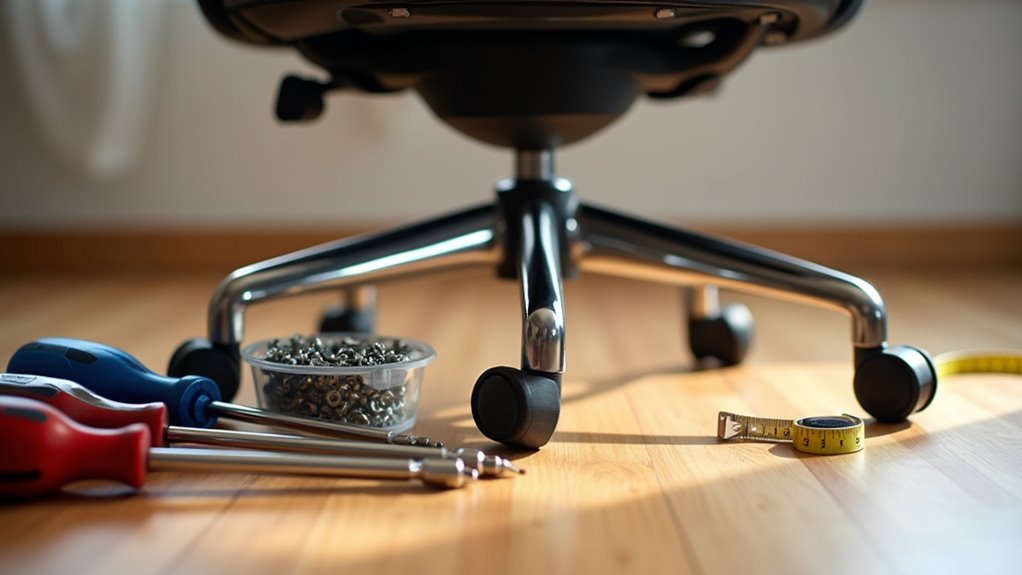
Tackling a creaky office chair is simple. Start with hardware maintenance. Check the chair base. Make sure all screws are tight. Adjust the seat height mechanism. Loose screws here can cause problems. Don’t forget the armrests! Secure those screws. Tighten the backrest bolts too.
Next, inspect the casters. Tighten those screws to ensure smooth movement. While you’re at it, look for wear or damage. Any worn-out screws or bushings need replacement. Additionally, consider replacing the chair cylinder if the creaking persists, as it can greatly enhance the overall performance of your chair. Regularly inspecting the chair structure is essential to maintain a quiet environment. A well-maintained chair can prevent issues such as pneumatic cylinder problems that lead to unwanted noise. Performing regular inspections on the chair’s hardware can also help catch problems early.
With a bit of tightening and inspection, you’ll have a quiet chair. A silent chair means fewer distractions. Keep your tools handy. Happy fixing!
Lubrication of Moving Parts
After tightening all those screws and bolts, it’s time to give your chair some love with lubrication!
Choose suitable lubricants like silicone oil or light machine oil. WD-40 is great for metal parts. Powdered graphite won’t attract dust. Regular lubrication of joints can prevent squeaking noises from developing over time. Regular maintenance, including checking for leaks in the hydraulic mechanism, can also help in keeping your chair functioning smoothly. It’s important to inspect the pneumatic cylinder for any signs of failure during your maintenance routine.
Find those squeaky spots! Pay attention to swivel mechanisms, rolling wheels, and creaky joints. Regular maintenance can prevent or reduce creaking sounds by ensuring all components are properly lubricated.
Use the WD-40 straw to reach tight spaces. For the hydraulic cylinder, let oil drip in and spread it around. A little goes a long way. Too much can get messy!
Test your chair after applying the lubricant. You should notice a smoother ride.
Regularly check and clean these areas to keep squeaks away. With a little effort and the right lubrication techniques, you’ll eliminate those annoying noises fast!
Inspection and Replacement of Worn Components
Keep your office chair quiet by inspecting and replacing worn parts.
Start by flipping your chair over to check all components. Look at moving parts like arms, wheels, and backrest connections. Check for looseness or wear. Roll each caster to spot uneven movement. Regular maintenance can prevent the need for a sinking chair to be replaced too soon.
Next, find the squeaks. Rock the chair to help identify noise sources. Notice any cracks or rust? Replace those parts. Regular maintenance can help prevent future issues and keep your chair functioning properly.
Tighten loose bolts and screws, but be careful not to break them. If casters are cracked, pull them out and get new ones. A sticking swivel mechanism may need replacing too. Additionally, maintaining the chair contributes to overall productivity and comfort.
With some effort, your chair can be squeak-free and ready to use! Great job on taking care of your chair!
Cleaning and Preventative Care
Keep your office chair clean and comfy. Clean it at least once a month. Use a damp cloth to wipe away dust and dirt. Don’t forget to vacuum the base and wheels. This keeps dirt from stopping your chair from moving smoothly. Regular cleaning helps maintain the chair’s appearance and hygiene.
Cleaning a mesh office chair is straightforward with simple steps that can be easily followed.
If hair or gunk gets stuck in the wheels, scrub them clean. Your chair deserves a spa day!
Check screws and bolts every few months. Tighten them gently to avoid damage. Lubricate moving parts like joints and gas lifts with a light spray. Be careful not to get any on fabric. Regular cleaning contributes to comfort and productivity. Treat your chair like the star it is. A well-maintained chair is good for your back!
Frequently Asked Questions
Can I Use Any Lubricant for My Office Chair?
You can’t use just any lubricant for your office chair. Different materials need different types of lubricants. For metal parts, use white lithium grease. It works great and lasts a long time. For plastic or rubber parts, silicone spray is a better choice. It’s safe for many materials and helps keep your chair moving smoothly.
Taking care of your chair helps it last longer. Regular maintenance keeps it in good shape. Choose the right lubricant for the best results. It’s simple and makes a big difference. Keep your chair comfortable and functional with the right care.
How Often Should I Perform Maintenance on My Chair?
Make a maintenance schedule for your chair. Check it monthly if you use it a lot. For lighter use, check every 3 to 4 months. Regular maintenance helps your chair last longer. It also stops wear and tear. This means a comfortable seat for you. Keep your chair in good shape. It’s easy and worth it!
Is It Safe to Disassemble My Office Chair?
Disassembling your office chair can be risky. Statistics show that 30% of DIY enthusiasts hurt themselves during this process. Safety should be your top concern. Know the chair’s parts before starting. Use the right tools for the job. Make sure everything is stable to avoid accidents. This will help keep you safe and protect your chair’s structure. Enjoy your DIY project while being smart about safety!
What Tools Do I Need for Chair Maintenance?
To maintain your chair, gather some important tools. You will need different types of screwdrivers. Flathead and Phillips screwdrivers are essential. They help in tightening or loosening screws easily.
Lubricants are also important. Silicone spray or grease works well. These products keep your chair moving smoothly. They help prevent squeaks and make repairs easier.
With the right tools, you can ensure your chair stays in great shape. Regular maintenance saves money and extends the life of your chair. Simple care goes a long way.
Can I Reduce Creaking Without Replacing Any Parts?
Regular chair maintenance helps reduce creaking. Tightening screws can make a big difference. Lubricating moving parts also helps silence those annoying noises. These simple steps improve your chair’s performance. You don’t need to replace any parts. Just a little care goes a long way. Keep your chair quiet and comfortable with these easy tips. Enjoy a more peaceful sitting experience!
Conclusion
Now you can stop that annoying creak in your office chair. With a few simple steps, you can make it quiet again! Think of it as a spa day for your chair. Tightening screws helps. Adding lubricant reduces friction. Cleaning makes everything work better.
First, check the screws. Use a screwdriver to tighten any loose ones. Next, find some lubricant. Spray it on the moving parts. This will help them glide smoothly. Don’t forget to clean your chair too. Dust and dirt can cause noise.
With a little effort, your chair can be as quiet as a library mouse. Enjoy your squeak-free workspace! Happy fixing!