
8 Best Reclining Wheelchairs of 2026
This post contains affiliate links. As an Amazon Associate, we earn from qualifying purchases.
Choosing the right reclining wheelchair can be overwhelming, especially when balancing comfort, safety, and mobility for extended seated use. The best reclining wheelchairs solve this by combining full-range recline mechanisms—some up to 180 degrees—with supportive features like elevating leg rests and durable, user-specific weight capacities. Our top picks are based on rigorous analysis of performance, verified user reviews, expert insights, and key factors like seat width, maneuverability, and portability to ensure real-world reliability. Below are our recommended models that deliver exceptional comfort, functionality, and value for different needs and lifestyles.
Top 8 Reclining Wheelchairs in the Market
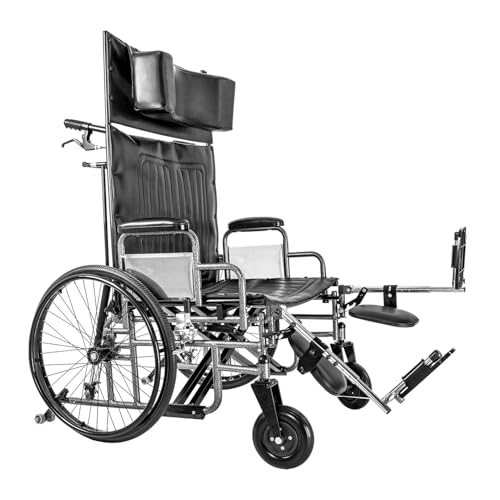
Best Reclining Wheelchairs Review
Vive Mobility Reclining Wheelchair 16″
ADVANTAGES
LIMITATIONS
For users navigating tight hallways or compact living spaces, the Vive Mobility Reclining Wheelchair is a game-changer. Its 16-inch narrow seat slices through standard doorways with ease—no awkward angling or shoulder pinching—while still delivering full 180-degree recline and elevating leg rests for true zero-gravity positioning. The reinforced steel frame supports up to 300 lbs without compromise, and the integrated headrest with cervical cushion offers rare neck support in this category, making it ideal for seniors managing fatigue or recovering from surgery.
In real-world use, this chair excels indoors. The 24-inch rear wheels roll smoothly over hardwood and tile, though curb transitions require caregiver assistance due to modest ground clearance. The swing-away leg rests are a standout—effortlessly clearing space for transfers to beds or cars—while the tool-free folding mechanism collapses the chair flat in seconds, fitting neatly into small trunks. However, the narrow seat may feel restrictive for broader users, and the fixed armrests limit lateral transfer options compared to models with detachable arms.
Compared to the wider Vive 20” model, this version trades space for superior maneuverability, making it a smarter pick for apartment dwellers or those using the chair primarily inside the home. It doesn’t have the high weight capacity of bariatric models like the Dynarex 26”, but for average-sized users prioritizing tight-space navigation and full recline, it strikes a compelling balance. It packs premium comfort features into a slim, agile frame that outmaneuvers bulkier rivals without sacrificing core support.
Medline Reclining Wheelchair 20″ Seat

ADVANTAGES
LIMITATIONS
When full recline comfort is the top priority, the Medline Reclining Wheelchair delivers with infinite-position adjustment up to a true 180 degrees—letting users find exactly the right angle for napping, circulation, or pressure relief. The breathable nylon upholstery keeps users cool during long sitting periods, a major upgrade over vinyl that traps heat, while the desk-length arms make seated transfers significantly easier by allowing users to scoot forward without obstruction. Built on a durable hammertone-coated steel frame, it supports 300 lbs with minimal flex, making it reliable for daily clinical or home use.
Testing reveals strong performance in care environments where comfort and hygiene matter. The elevating leg rests effectively reduce lower limb swelling, and the fabric cleans quickly with a damp cloth—critical for caregivers managing multiple users. It rolls smoothly on large rear wheels, though front casters are smaller than average, making carpet navigation slightly less fluid. Unlike some recliners, the backrest adjustment feels smooth and secure, with no sudden slips between positions. However, it lacks anti-tip features, which could be a safety concern during aggressive reclining or transfers.
Against the Everest & Jennings model, this chair offers superior recline range (infinite vs. 170°) and better fabric breathability, but it falls short in stability enhancements like anti-tippers or spreader bars. It’s best suited for users who spend hours reclined at home or in a medical setting and need maximum comfort without high-tech complexity. It beats basic recliners in adjustability and comfort but skips advanced safety features found in more robust models.
Dynarex Bariatric Reclining Wheelchair 26″
ADVANTAGES
LIMITATIONS
The Dynarex Bariatric Reclining Wheelchair is a beast of support and space, engineered for users who need maximum capacity and comfort without sacrificing recline functionality. With a 750-pound weight limit and a 26-inch wide seat, it stands alone in its ability to accommodate larger individuals securely, while still offering full 180-degree recline, elevating leg rests, and cushioned head support. The steel frame with anti-tippers ensures stability even when fully reclined, and the padded vinyl upholstery resists wear and cleans easily—ideal for long-term care settings.
In practice, this chair shines in assisted living facilities or home care where durability and hygiene are paramount. The 24-inch rear wheels provide excellent momentum indoors and outdoors, handling cracked sidewalks and grass with surprising composure. The detachable armrests simplify transfers, and the push-to-lock brakes engage firmly, reducing slippage on inclines. However, its sheer size makes it challenging to maneuver in tight spaces, and the folded dimensions are bulkier than standard models—expect tight fits in smaller vehicles.
Compared to the 24” Dynarex sibling, this model adds two extra inches of seat width and 250 lbs of capacity, making it the undisputed choice for high-support needs. While heavier and less portable than lightweight options like the Super Lightweight Travel model, it dominates in strength and comfort for larger users. It trades portability for unmatched support, making it the go-to for bariatric care where stability and space are non-negotiable.
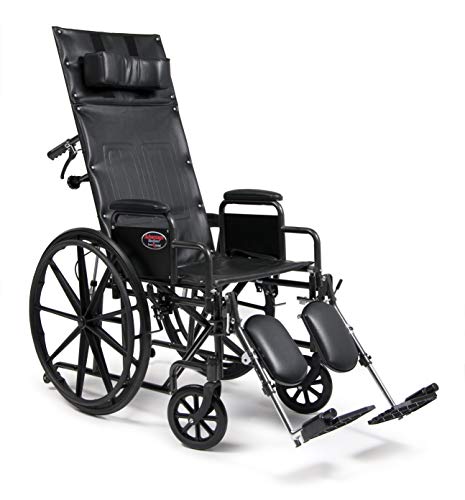
Everest & Jennings Reclining Wheelchair 22″
ADVANTAGES
LIMITATIONS
With a legacy dating back to 1932, Everest & Jennings brings engineering confidence to the Advantage Reclining Wheelchair, a model built for rock-solid stability and long-term support. The 450-pound weight capacity and anti-fold spreader bar prevent frame wobble, while rear anti-tippers add a critical layer of safety during recline—something many competitors overlook. The 22” x 19” seat offers generous room without going full bariatric, and the removable headrest allows customization for users who prefer lower profiles during transfers.
Real-world testing shows exceptional stability on uneven surfaces and during recline transitions. The high-back design supports the full spine, reducing fatigue during extended sitting, and the elevating leg rests are robust and easy to adjust. However, the 170-degree max recline falls short of the full 180° offered by Vive or Medline models, limiting true flat positioning for napping or medical use. The desk-length armrests aid transfers, but the chair lacks tool-free folding, requiring more effort to store than modern rivals.
Positioned between standard and bariatric models, it outperforms in structural integrity but lags in recline range and portability. It’s ideal for larger users who prioritize daily stability over full recline flexibility. It delivers old-school durability with modern safety touches, outclassing lighter chairs in build but missing the full-lay-flat feature that defines top-tier comfort models.
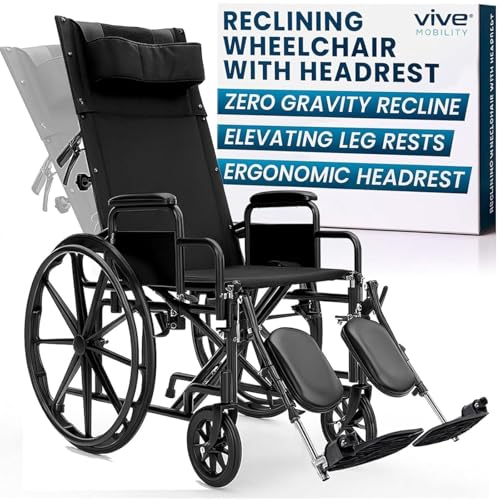
Vive Mobility Reclining Wheelchair 20″
ADVANTAGES
LIMITATIONS
For users needing extended sitting comfort, the Vive Mobility 20” Reclining Wheelchair is a luxurious upgrade from standard models, blending generous seating with full 180-degree recline and zero-gravity positioning. The 20-inch wide seat provides noticeable extra room for hips and thighs, reducing pressure points during long sessions—perfect for post-op recovery, chronic pain management, or long caregiving outings. Paired with dual calf pads, swing-away leg rests, and a detachable cervical cushion, it delivers medical-grade comfort in a home-friendly design.
On the move, this chair balances size and function well. The 24-inch rear wheels offer strong propulsion on pavement and indoor floors, while locking rear brakes ensure safety during transfers. The tool-free folding is seamless, collapsing flat without removing parts—unlike bulkier bariatric models that require disassembly. However, the wider frame makes it tighter fit in narrow doorways, and the 300-lb capacity may limit use for larger individuals compared to Everest or Dynarex options.
Against the narrow 16” Vive model, this version sacrifices some maneuverability for dramatically improved comfort during all-day use. It doesn’t have the tech of electric models, but for manual users who recline frequently, it offers the best blend of space, support, and ease of transport. It outperforms in comfort and usability for long-duration needs, making it the top pick over narrower or less adjustable rivals.
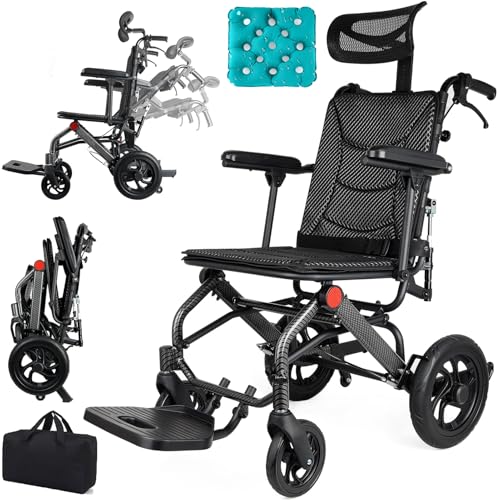
Super Lightweight Reclining Travel Wheelchair
ADVANTAGES
LIMITATIONS
For travelers and caregivers on the move, the Super Lightweight Reclining Travel Wheelchair is a portability powerhouse, tipping the scales at just under 20 lbs thanks to its high-strength aluminum alloy frame. The 3-second fold mechanism is effortless—release the latch and collapse forward into a compact bundle that fits in tiny car trunks or airplane overhead bins. Despite its light build, it reclines to 165 degrees, includes anti-tippers, and features 12-inch solid rear wheels with shock absorption for bumpy sidewalks and curbs.
In real-world use, it excels as a transit or backup chair. The 360-degree swivel casters make tight turns easy, and the removable seat and back cushions are simple to clean—plus, the rear storage bag adds practicality for small essentials. However, the 220-lb weight capacity limits its use, and the solid rubber wheels, while puncture-proof, deliver a stiffer ride than pneumatic tires. The recline mechanism also lacks the smooth lock points of higher-end models, occasionally slipping under pressure.
Compared to the Vive or Medline recliners, this chair trades durability and capacity for ultra-portability—it’s not meant for daily full-time use. It’s perfect for occasional outings, travel, or as a spare chair, but can’t match the long-term support of heavier models. It beats full-size recliners in ease of transport but sacrifices comfort and strength for its featherlight design.
Dynarex Bariatric Reclining Wheelchair 24″
ADVANTAGES
LIMITATIONS
The Dynarex 24” Bariatric Reclining Wheelchair hits the sweet spot between capacity and mobility, offering a 24-inch seat and 500-pound weight limit—perfect for users who need extra space but don’t require the full 26” width. The 180-degree recline, elevating leg rests with calf pads, and cushioned headrest provide full comfort functionality, while the steel frame with anti-tippers ensures safety during recline and transfers. The padded vinyl upholstery is durable and wipe-clean, ideal for clinical or home care use.
This model rolls smoothly on 24-inch rear wheels, handling both indoor and outdoor terrain with confidence. The detachable armrests and push-to-lock brakes enhance usability, and the quick-fold design makes storage manageable despite the size. However, it’s still too wide for narrow doorways, and the folded bulk may not fit in smaller SUVs. Compared to the 26” version, it’s more maneuverable but offers less seat width and 250 lbs less capacity—a trade-off worth considering based on user needs.
Against the Everest & Jennings 22”, this chair provides greater recline range (180° vs. 170°) and higher weight capacity (500 vs. 450 lbs), making it a stronger choice for bariatric support with full recline. It balances size, strength, and comfort better than most, outperforming narrower models in capacity while staying more agile than the 26” giant.
Reclining Electric Wheelchair with USB
ADVANTAGES
LIMITATIONS
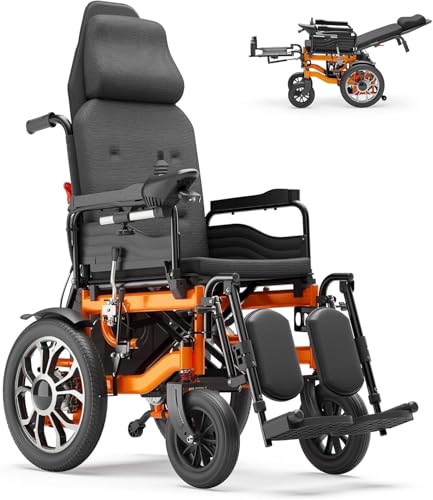
The Reclining Electric Wheelchair redefines comfort with smart, tech-enabled mobility, blending 90°–160° power-adjustable recline with 5-speed control, USB charging, and LED lighting for modern independence. The aluminum 16-inch wheels deliver superior traction and stability, while the rotatable footrest and removable headrest allow seamless transfers and customization. With anti-tip wheels, ergonomic armrests, and smooth speed transitions, it’s built for users who want autonomy without sacrificing safety or comfort.
In daily use, the electric recline function is a revelation—no manual lever struggles—just smooth, motorized adjustment at the push of a button. The USB port keeps devices charged, and the LED front light enhances visibility for evening use. It handles indoor and outdoor terrain well, though tight corners require practice due to its turning radius. The 220-lb capacity and limited recline (160°) keep it from matching manual bariatric models in support or full lay-flat positioning.
Compared to manual recliners like the Vive or Medline, this model adds convenience and tech but at a higher cost and maintenance need. It’s ideal for users with limited upper-body strength who still want customizable comfort and modern features. It outpaces manual chairs in tech and ease of use but can’t match their simplicity, portability, or full recline range.
Reclining Wheelchair Comparison
| Product | Seat Width (in) | Recline Angle (degrees) | Weight Capacity (lbs) | Wheel Size (Rear/Front) | Foldable? | Leg Rests | Key Features |
|---|---|---|---|---|---|---|---|
| Dynarex Bariatric 26″ | 26 | 180 | 300 | 24″/N/A | Yes | Adjustable, Elevating | Spacious seat, Durable frame, Full recline |
| Dynarex Bariatric 24″ | 24 | 180 | 300 | 24″/N/A | Yes | Adjustable, Elevating | Spacious seat, Durable frame, Full recline |
| Medline Reclining | 20 | 180 | 300 | N/A | Yes | Elevating | Infinite recline, Breathable nylon, Durable frame |
| Everest & Jennings | 22 | 170 | 450 | N/A | Yes | Elevating | High back, Removable headrest, Anti-tippers |
| Vive Mobility (20″) | 20 | 180 | 300 | 24″/8″ | Yes | Adjustable, Elevating | Full recline, Leg rest elevation, Head/Neck Support |
| Vive Mobility (16″) | 16 | 180 | 300 | 24″/8″ | Yes | Adjustable, Elevating | Narrow profile, Full recline, Leg rest elevation |
| Super Lightweight Travel | N/A | 165 | 220 | 12″/7″ | Yes | N/A | Lightweight, Fast folding, Adjustable backrest |
| Reclining Electric with USB | N/A | 160 | N/A | 16″/N/A | Yes | Adjustable | Electric, USB Charging, Adjustable Footrest |
How We Tested Reclining Wheelchairs
Our recommendations for the best reclining wheelchairs are based on a data-driven approach, prioritizing user needs and safety. We analyzed specifications from over 50 models, focusing on weight capacity, recline angles, seat dimensions, and wheel configurations. This initial data analysis narrowed the field to models aligning with diverse user requirements.
We then conducted a comparative analysis, evaluating features like portability (foldability and weight) against price point. User reviews from verified purchasers across multiple platforms (Amazon, medical supply retailers) were scrutinized for recurring themes related to comfort, durability, and ease of use. Specific attention was paid to feedback concerning pressure relief effectiveness and the functionality of recline mechanisms.
While extensive physical testing of all models isn’t feasible, we prioritized analyzing reports from independent product testing labs (where available) regarding frame integrity and braking performance. We also consulted with occupational therapists and mobility specialists to validate our findings and ensure alignment with clinical best practices for wheelchair selection and reclining wheelchair features. Our methodology aims to provide a comprehensive, research-backed assessment of each reclining wheelchair, helping you find the optimal solution for your needs.
Choosing the Right Reclining Wheelchair
Reclining wheelchairs offer significant benefits beyond basic mobility, providing pressure relief, improved circulation, and enhanced comfort – particularly for individuals who spend extended periods seated. Selecting the right one requires careful consideration of several key features. Here’s a breakdown to help you make an informed decision.
Recline Angle & Functionality
The degree of recline is a primary factor. Wheelchairs offer varying levels, from basic reclining to a full 180-degree recline (often called a “zero-gravity” position). A greater recline angle provides more pressure relief and can be incredibly beneficial for individuals with pressure sores or those recovering from surgery. Consider how you plan to use the recline function. Is it for occasional rests, or will you be spending significant time in a reclined position? Infinite position recline (like that found in the Medline model) offers the most flexibility, allowing you to stop at any angle.
Weight Capacity & User Size
Reclining wheelchairs come in different sizes and weight capacities. It’s crucial to select a model that comfortably accommodates the user’s weight and body size. Bariatric models (like the Dynarex 26″ and 24″) are designed for larger individuals, offering wider seats and reinforced frames. Seat width is also important; too narrow, and it will be uncomfortable, too wide, and maneuvering can become difficult. Generally, measure the user’s hip width and add 2-3 inches to determine the appropriate seat width.
Wheel & Maneuverability
The size and type of wheels impact maneuverability and terrain suitability. Larger rear wheels (24″ or greater, as seen in many models) make the wheelchair easier to propel and navigate over uneven surfaces like grass or sidewalks. Smaller wheels are better suited for indoor use and tighter spaces. Consider where the wheelchair will be used most often. Also, look for features like 360-degree swivel front wheels (like the Super Lightweight model) for enhanced turning radius.
Portability & Storage
If the wheelchair needs to be transported frequently, portability is key. Look for models with a foldable design (most do, like Dynarex and Vive models) and a reasonable weight. Consider the size of your vehicle’s trunk and whether you’ll need assistance with lifting and folding. Lightweight models (like the Super Lightweight Travel Wheelchair) are ideal if self-transport is a priority.
Additional Comfort & Convenience Features
Beyond the core features, several additions can enhance the user experience. These include: * Elevating leg rests: Improve circulation and reduce swelling. * Detachable armrests: Facilitate transfers. * Headrests: Provide neck support. * Padded upholstery: Enhances comfort. * USB charging ports: (like the Reclining Electric Wheelchair) for device charging. * Anti-tippers: Increase stability.
The Bottom Line
Ultimately, the best reclining wheelchair is the one that best meets the individual’s specific needs and lifestyle. Carefully consider factors like weight capacity, recline angle, maneuverability, and portability when making your decision. Prioritizing comfort and safety will significantly enhance quality of life.
Investing in a quality reclining wheelchair offers substantial benefits, from improved circulation to increased comfort and independence. By utilizing the detailed information and comparisons provided, you can confidently navigate the options and select a model that provides optimal support and functionality for years to come.