
How to Fix a Lawn Chair
This post contains affiliate links. As an Amazon Associate, we earn from qualifying purchases.
To fix a wobbly lawn chair, start by removing the old webbing straps and cleaning the frame thoroughly. Use warm soapy water for cleaning, and if you find any rust, sandpaper will help address that. Next, measure the seat and back for new fabric, and weave in the replacement strips tightly. Additional tips for making your lawn chair look brand new will follow!
Essential Facts in 30 Seconds
- Cut old webbing into sections and use pliers to remove it without damaging the frame.
- Clean the chair frame with warm water and mild soap; avoid harsh chemicals.
- Check for damage or rust; use a rubber mallet to reshape and fine-grit sandpaper to remove rust.
- Measure the chair for replacement fabric, rounding up for a snug fit.
- Weave new webbing securely, maintaining even tension, and apply protectant for durability.
Removing Old Webbing
Removing old webbing from a lawn chair is easier than it seems. Start by gathering your tools. Use channel locks or pliers to pull out the old webbing and staples. Wear gloves to protect your hands from sharp edges.
Cut the webbing into smaller sections. Use your pliers to grip and pull off the old material. For stubborn staples, a pointed awl can help pry them out. Avoid hammering; it can cause damage. It’s important to identify the attachment style of the old webbing to determine the best method for removal.
Keep track of where each fastener goes. This will help you later when adding new webbing. Measure the lengths of the old webbing before you throw it away. This ensures you buy the correct size for the new webbing.
If you find rusty staples, handle them with care. With these steps, you’re ready to move on to the next part of your project!
Cleaning and Preparing the Frame
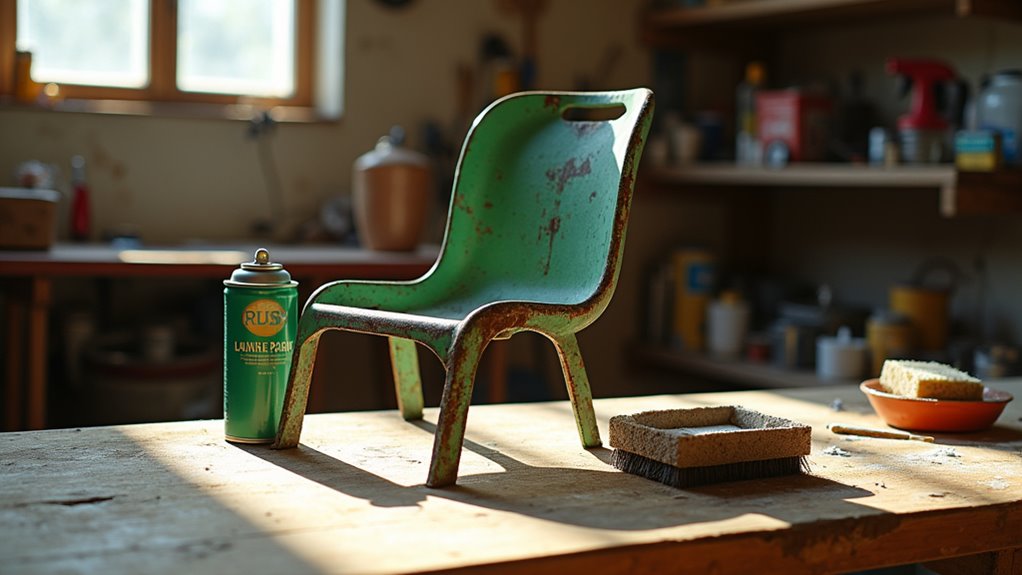
Cleaning and preparing the frame of your lawn chair is essential. Start with warm water and mild dish soap. This gentle mix helps protect the chair’s finish. For outdoor chair cushions, it’s important to avoid harsh chemicals; they can damage your chair. Using a soft brush helps to gently loosen dirt during cleaning. Additionally, it’s best to remove cushions before cleaning for easier access to the frame.
Use a soft-bristle brush to scrub off dirt. Don’t scrub too hard! For tough stains, mix baking soda with water and gently scrub. Rinse the frame with a garden hose. Blot any extra water with a soft cloth to help it dry faster. Remember, moisture can cause rust.
After cleaning, let your chair air dry in a shady area. Follow these tips, and your lawn chair will be ready for fun. No more ketchup stains allowed!
Addressing Frame Damage and Rust
Tackling frame damage and rust on your lawn chair is important. Start by checking for bent frames. Use a rubber mallet to gently shape them back. For broken frames, welding is necessary. Clean the area first to ensure a good bond. Rust can hide on steel parts. Use fine-grit sandpaper to remove it, then apply a rust converter. Regular inspections can help identify common issues before they become severe, including loose screws that may compromise stability. Maintaining the frame’s integrity is crucial, as regular maintenance can significantly extend the life of your chair.
Here’s a simple table to keep things organized:
| Frame Issue | Fix Method | Rust Prevention |
|---|---|---|
| Bent Frame | Tap gently with a rubber mallet | Regular inspections |
| Broken Frame | Weld after cleaning | Protective coatings |
| Rusty Hardware | Replace with stainless steel | Store in a dry place |
| Scratches | Sand and touch up with paint | Use rust-resistant paint |
| Loose Joints | Tighten screws for stability | Check regularly |
Follow these tips to make your chair look great again!
Measuring and Ordering Replacement Fabric
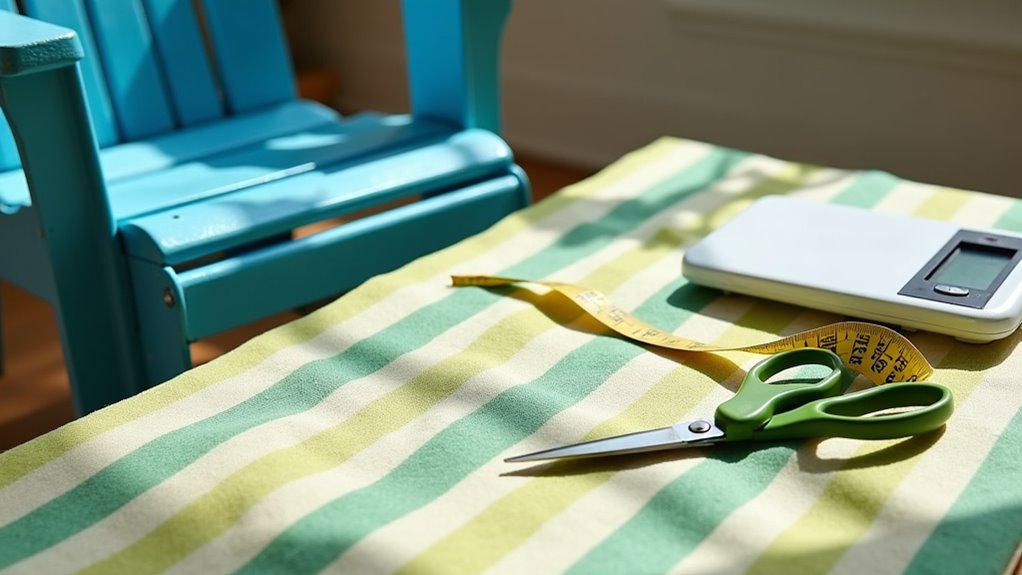
You’ve fixed the frame damage and rust on your lawn chair. Now it’s time to make that seat look fresh and comfy again with new fabric. Here’s how to measure and order replacement fabric:
- Measure the height and width of the back and seat of your chair carefully.
- Check the spline size too. This holds the fabric in place.
- Round all measurements up to the nearest 1/8 inch. This ensures a snug fit.
- Double-check everything before you order. A mistake can lead to a fabric fail! attaching new fabric with a staple gun will ensure that it is securely fastened. Additionally, you may want to consider choosing durable fabric to withstand wear over time.
Choose fabric that’s durable and stylish. Keep those measurements close. Don’t hesitate to ask the supplier for help. They know their stuff! Additionally, consider the condition of the foam padding for added comfort and support.
Once you have everything sorted, your lawn chair will look brand new. Say goodbye to ketchup stains!
Installing New Webbing and Finishing Repairs
Installing new webbing on your chair is like making a cozy blanket. It takes some effort but is rewarding!
Start by laying the new webbing across the seat’s back. Attach it securely to the underside using screws and washers. Fold the ends under to make it look neat.
Next, let’s focus on weaving. Begin with horizontal strips. Then, weave vertical strips over them. Make sure to alternate the strands. Go over and under for a tight fit. Keep the tension even for comfort and durability.
Check your fasteners. Use screws or clips? Tighten everything up. Replace any rusty parts.
Once finished, look for loose sections. Treat the new webbing with a protectant. Your lawn chair is almost ready for relaxing!
Frequently Asked Questions
How Often Should I Replace Lawn Chair Webbing?
Replace lawn chair webbing based on how long it lasts. Vinyl webbing lasts about 3 to 5 years. Nylon webbing lasts around 2 to 4 years. Elastic webbing usually lasts 1 to 3 years.
Check your chairs regularly. Look for sagging, fraying, or brittleness. If you see these signs, replace the webbing sooner. Keeping your chairs safe and comfortable is important. Regular checks help ensure they stay in good shape for years.
Can I Use Any Fabric for the Sling Replacement?
Not all fabrics work for sling replacements. Choose strong materials that last. Look for vinyl-coated polyester or Sunbrella. These options ensure comfort and durability. They fit well on outdoor chairs. Make sure the fabric can handle weather changes. It should resist fading and wear. A good sling will improve your chair’s look and feel.
What Tools Are Essential for Lawn Chair Repair?
Ready to fix your lawn chair? Start with some essential tools. You need different types of screwdrivers. Heavy-duty scissors are a must for cutting fabric. A cordless drill will make your job easier.
These tools help you repair wobbly chairs and breathe new life into them. With the right tools, you can tackle any lawn chair project. Get ready to turn those chairs into something special!
How Do I Prevent Rust on My Lawn Chair?
Prevent rust on your lawn chair by using rust-resistant coatings often. Check for rust spots and clean any dirt or debris. Store your chair indoors during bad weather to keep it safe. Regular maintenance helps your chair last longer and stay in good shape. Enjoy your outdoor space without worry!
Is It Worth Repairing an Old Lawn Chair?
Repairing an old lawn chair can offer great value. If the costs of repairs are low, it may be worth it. An old chair can bring comfort and memories. A sturdy chair can last for many more seasons. Simple fixes, like replacing fabric or tightening screws, can make a big difference.
Consider the materials. Metal frames are often strong and durable. Wooden chairs can be restored with some sanding and paint. Plastic chairs might crack, but many can be fixed easily. Think about how much you enjoy using the chair. If it holds special memories, it’s worth keeping.
In the end, a repaired chair can bring joy and comfort back to your outdoor space. Don’t let an old chair go to waste. A little effort can make it feel like new again.
Conclusion
Fixing a lawn chair is simple and rewarding. With some effort, you can make your chair look great again. Gather your tools and get started. Check for broken parts. Replace any damaged slats or fabric. Tighten loose screws and bolts. A little paint can make it shine.
Enjoy your hard work. Soon, you will relax in your refreshed chair. Perfect for sunny days and backyard fun. Celebrate your DIY success!