
How to Fix an Office Chair That Keeps Going Down
This post contains affiliate links. As an Amazon Associate, we earn from qualifying purchases.
If your office chair keeps sinking, it’s likely due to a faulty gas lift cylinder. To fix this issue, check the cylinder for leaks or rust, and consider using a hose clamp to secure it or a PVC pipe for added height. Make sure to tighten any loose screws and lubricate the moving parts every six months. If these solutions don’t work, you may need to replace some parts. Further details and explanations will follow for those looking for a deeper understanding of the process.
Essential Facts in 30 Seconds
- Inspect the gas lift cylinder for leaks, rust, or damage to determine the cause of the sinking issue.
- Use a hose clamp for a quick fix or add a PVC extension pipe for temporary height support.
- Clean and lubricate chair components regularly to ensure smooth operation.
- Check and tighten loose screws or bolts weekly for stability.
- Seek professional help if DIY fixes do not resolve the hydraulic system issues.
Identifying the Problem
Office chairs often sink lower than expected. This happens because of problems in the pneumatic cylinder. The seals inside the cylinder are key to keeping the chair’s height stable. Over time, these seals can wear out. This wear happens from regular use or too much weight. Weak pressure in the piston mechanism is a primary reason for the chair sinking. A malfunctioning height adjustment lever can also contribute to height issues.
To find out what’s wrong, watch how the chair sinks. A slow drop usually means the seals are worn, and visible damage on the cylinder can indicate further issues. A sudden drop could mean a more serious issue. Check for any cracks or damage around the cylinder, as wear and tear on chair parts can lead to additional problems.
Cleaning and lubricating the chair can help prevent these problems. Regular care keeps your chair working well.
With some simple checks, you can fix your chair and enjoy sitting at the right height again!
Assessing the Chair’s Parts
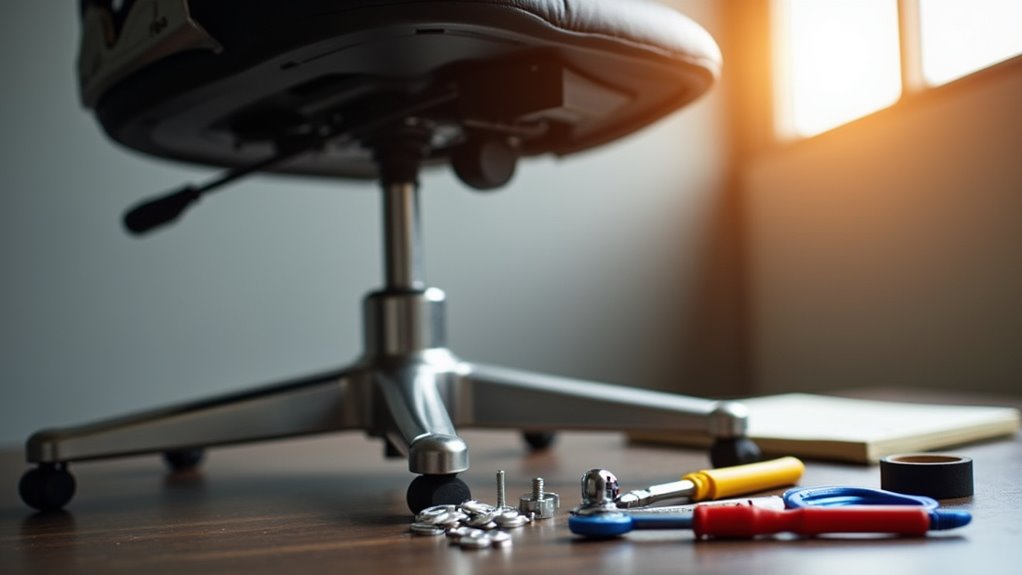
Fixing your office chair can be fun and rewarding. Start with the chair base. Check if it’s metal or plastic. Metal bases last longer and are often more durable. Next, inspect the chair mechanism. This part controls height and tilt. Make sure it works properly. The components of an office chair include the seat, back, base, gas piston, armrests, and caster wheels. Regularly checking the chair’s wheels for smooth rolling can also enhance its overall performance. Additionally, be aware that pneumatic cylinder issues can often lead to sinking problems. Regular inspections can help identify worn-out pneumatic cylinders before they become a major issue.
Here’s a helpful table to remember:
| Chair Part | Key Features |
|---|---|
| Chair Base | Supports the chair, adjustable height |
| Chair Mechanism | Allows height and tilt adjustments |
| Seat | Cushioned, adjustable for comfort |
| Armrests | Support posture, often adjustable |
Look for any wear and tear. Keep everything clean for better performance. Regular maintenance helps your chair feel fresh and last longer. Get ready for some DIY fixes!
Applying DIY Fixes
A chair that sinks can be fixed easily. Use a hose clamp to keep it at the right height. An extension pipe can give extra support. Both methods are simple and effective. Regular maintenance can help prevent future issues and keep your chair functioning properly. Fixing options range from temporary fixes to permanent solutions, giving you various choices for repair. Just gather your tools. With a little effort, your chair will be back in action! Recognizing the problem early is crucial for effective repair.
Hose Clamp Method
A sinking office chair can be a real hassle. Luckily, there’s a simple fix with a hose clamp.
First, adjust your chair to your preferred height. Make sure your feet touch the ground. Next, remove any plastic covers to see the gas lift cylinder. Wipe it clean for the best results.
Take the hose clamp and wrap it around the top of the cylinder. Tighten it gently—don’t overdo it! Sit down a few times to see if the chair holds. If it still sinks, tighten the clamp a bit more.
This fix isn’t permanent, but it works well for now. It’s a quick way to keep your chair at the right height.
Extension Pipe Support
Fixing a sinking office chair is easier than it seems. Use PVC pipe to make an extension pipe support for height adjustment.
Start by measuring the chair cylinder’s diameter. Find PVC that fits snugly. Cut the pipe lengthwise to make it easy to snap over the chair’s cylinder. Test the fit to ensure it doesn’t wobble. A snug fit can prevent unwanted movement during use. Additionally, ensure that the PVC pipe is compatible with the chair model to maintain stability.
Once secure, adjust your chair to the desired height. Place the pipe over the cylinder. You can stack pipe segments for more height. Be careful not to make it too tight. A tight fit can stop your chair from swiveling.
Check the PVC for any cracks. This simple fix keeps your chair at the right height for comfortable sitting. Proper height enhances posture and comfort and enjoy your newly fixed chair!
Preventative Measures
Keeping your office chair in great shape is easy with some care. Regular checks and maintenance can stop sinking problems. Inspect the gas lift cylinder for leaks or rust. Test the height adjustment lever to make sure it locks well. Lubricate moving parts every six months. Adjusting chair height can also help prevent sinking issues. Tighten any loose screws or bolts each week. Regularly inspect creaking and loose components to maintain chair integrity, as wobbly legs can lead to discomfort and further damage.
Here’s a simple table to help you track chair care:
| Maintenance Task | Frequency | Tips |
|---|---|---|
| Inspect gas lift cylinder | Monthly | Check for rust or leaks! |
| Lubricate moving parts | Every 6 months | Use silicone or WD-40! |
| Tighten screws and bolts | Weekly to monthly | Don’t over-tighten! |
| Clean surfaces | Weekly | Vacuum and wipe down! |
| Replace worn parts | Every 6 months | Look at casters and cushions! |
Stay on top of these tasks. Your chair will last longer and stay comfortable!
Choosing Replacement Parts
Picking replacement parts for your office chair? Check the cylinder compatibility first. It must fit perfectly.
Consider the cost and effort of the replacement. Sometimes, fixing the chair is easier and cheaper than you think.
Make your chair feel like new without spending too much money. Take your time to find the right parts. Your comfort matters!
Cylinder Compatibility Check
To find a replacement cylinder for your office chair, check the specifications. Measure the overall length when compressed and extended. Make sure these measurements match your chair. Don’t forget to check the stroke length for height adjustments!
The piston diameter is usually about 1.1 inches. You’ll also need a base diameter that fits snugly into your chair’s star base—typically 2 inches.
Test for compatibility. The piston end should fit securely into the seat mechanism. It shouldn’t wiggle. For special chairs like Herman Miller, look for specific solutions from the manufacturer. Adjusting the chair height properly is essential for maintaining comfort and posture.
Weight capacity matters too. Choose a cylinder that meets your weight requirements for safety and comfort. You can do this!
Cost vs. Replacement Evaluation
Finding the right parts for your office chair can feel like a treasure hunt. Don’t worry—you can do it! Replacing parts is often much cheaper than buying a new chair. A new chair can cost between $300 and $1,000. In contrast, parts like the gas cylinder only cost $25 to $70. Regularly checking the wheel condition can also help in maintaining your chair’s functionality. Additionally, tightening loose screws can prevent further issues and extend your chair’s life.
Here’s a quick breakdown:
| Replacement Cost | Chair Longevity |
|---|---|
| $25 – $70 | Extend by years |
| $300 – $1,000 | New purchase |
| Save hundreds | Reduce waste |
| Quality parts | Boost comfort |
Investing in good parts helps your chair last longer. You save money and keep your chair comfy. Regular cleaning extends the chair’s lifespan and helps maintain its functionality. Make that chair last!
Seeking Professional Help
Feeling stuck with your sinking office chair? Calling a professional can help! Expert services save you time and effort. They quickly find the problem, whether it’s a hydraulic issue or a worn-out cylinder.
These technicians know how to fix chair mechanics. They also have access to the right replacement parts. Finding these parts on your own can be hard.
Fixing your chair is often cheaper than buying a new one. A comfortable and safe chair is important for your work. Let the pros handle it for you! Additionally, they can provide insights on proper height adjustment to ensure your chair remains comfortable and functional after repairs.
Frequently Asked Questions
Can I Use Any Hose Clamp for My Office Chair Repair?
Not every hose clamp works for office chair repairs. Each chair needs a specific type of clamp. Check for compatibility before buying one. Using the right clamp helps keep your chair in good shape. Proper maintenance saves time and ensures your chair functions well.
How Long Does a Gas Lift Cylinder Typically Last?
A gas lift cylinder usually lasts about 5 to 10 years. Its lifespan depends on how often you use your office chair and how well you take care of it. Regular maintenance is key. Check the cylinder often for any issues. Proper use also helps keep it working longer. A well-maintained chair is more comfortable and functional. Taking care of your gas lift cylinder ensures you get the most out of your chair.
What Does a Leaking Gas Lift Cylinder Look Like?
A leaking gas lift cylinder resembles a deflated balloon. You might notice rust forming on the cylinder. Unusual noises can come from the chair. The chair may also struggle to hold its height. These signs mean it’s time for a replacement. Don’t ignore these issues. A faulty cylinder can lead to accidents. Always check your gas lift cylinder for these problems. Regular maintenance helps keep your chair safe and functional.
Is It Worth Repairing an Old Office Chair?
Repairing an old office chair can be a smart choice. If the cost of repair is low compared to buying a new chair, it makes sense to fix it. Quality repairs can extend the life of your chair. This means you can enjoy more comfortable seating for a longer time.
Think about the parts that need fixing. Is the cushion worn out? Can you replace it easily? Are the wheels squeaking? Fixing these issues might be simple and cheap.
A good office chair supports your back and helps you work better. Investing in repairs can save you money and make your workspace nicer.
Before deciding, check the prices of new chairs. Compare them to the repair costs. This way, you can choose what’s best for your budget. A repaired chair can feel just as good as a new one. Make the choice that works for you!
Can I Use My Chair While Waiting for Replacement Parts?
You can keep using your chair while waiting for replacement parts. Just make sure it stays stable. Tighten any loose screws to help. Adding cushions can offer extra support. Avoid heavy movements to stop further damage or accidents. Stay safe and comfortable while you wait.
Conclusion
Fixing an office chair that keeps sinking can feel like a challenge. With patience and some simple tips, you can fix it. Start by checking the chair’s parts. Look at the gas lift cylinder. This part controls the height. If it’s damaged, it may need replacement.
Another trick is to use a PVC pipe. Cut a piece to the right length. Place it over the gas lift cylinder. This can stop the chair from sinking.
Use a clamp to hold the height you want. Tighten it so the chair stays up. If these methods don’t work, consider getting new parts. A new gas lift cylinder can solve the problem.
Don’t hesitate to ask for help if needed. Your comfy chair is worth the effort. You can do this!