
How to Sew Chair Covers
This post contains affiliate links. As an Amazon Associate, we earn from qualifying purchases.
To sew chair covers, begin by measuring the cushion dimensions and adding an inch for seam allowance. Select a durable fabric, pin the pieces right sides together, and sew using a straight stitch—making sure to backstitch for stability. Attach the seat and back, and consider adding a decorative skirt if desired. For a secure fit, you can use elastic or ties. Further details and techniques will be provided later in the article for those seeking more comprehensive guidance.
Essential Facts in 30 Seconds
- Measure chair dimensions accurately, including armrests, and add seam allowances.
- Select durable upholstery fabric and pin pieces with right sides facing.
- Use a straight stitch with a 1/2 inch seam allowance; backstitch at the start and end.
- Add skirts or decorative elements, ensuring raw edges are overlocked to prevent fraying.
- Incorporate elastic, ties, or zippers for a secure fit and easy removal for cleaning.
Measuring and Cutting Fabric
Measuring and cutting fabric for chair covers is a fun task. It’s easier than you might think! Start with your measuring tools, like a tape measure. Measure the length and width of your cushions from seam to seam. Remember to add an inch for seam allowances.
Next, measure the chair frame, including the armrests. Write everything down. For cushions, double the length to cover both the top and bottom. Accurate fabric estimation is crucial to ensure you have enough material for your project. Additionally, ensure you consider the dimensions of your chair when measuring to achieve a perfect fit. Many chair covers are available at local home goods stores, making it easy to find fabric that matches your style. Measuring accurately will help you create a slipcover that fits snugly.
Most upholstery fabrics are 54 inches wide. Use this width to help calculate how much fabric you need. If your fabric has a pattern, add extra to match those repeats.
Always round up your yardage to avoid running short. Nobody wants that! With these tips, you’re ready for your project. Enjoy the process!
Basic Construction Techniques
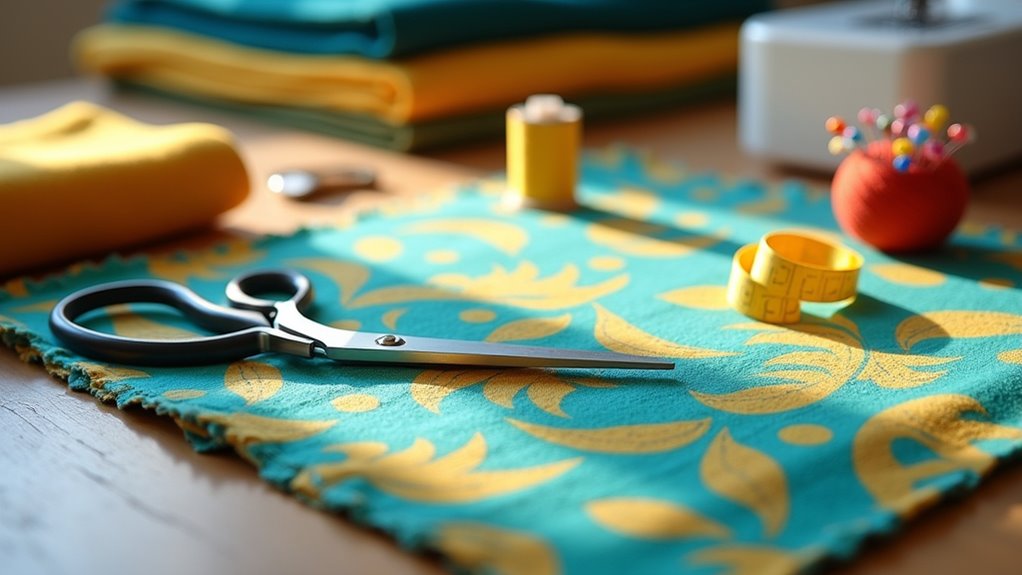
Get ready to dive into sewing chair covers! Start with fabric selection. Pick something strong and stylish, like stretchy polyester or rustic burlap. Consider using durable and decor-complementing fabric options to enhance both function and aesthetics. It’s also important to choose durable fabric for frequent use to ensure longevity.
Don’t forget to add seam allowances of about 5/8” to 1”. This step is crucial for perfect seams.
Next, pin the pieces together with the right sides facing each other. This keeps everything snug and secure. Measuring chair back’s widest and highest points will ensure a proper fit for your covers. Double-checking measurements is essential to avoid mistakes during assembly.
Use a straight stitch when sewing. Backstitch at the start and end to keep your corners neat. Remember to measure chair seat dimensions accurately to avoid any fitting issues.
Sew slowly around curves. Clip the edges to avoid puckering. Soon, you’ll craft custom chair covers like a pro!
Oops! Spilled ketchup? No worries. Let’s make that stain disappear quickly!
Attaching Seat and Back Pieces
Let’s attach those seat and back pieces like a pro! Start by placing your fabric pieces right sides together. This ensures they align perfectly. Use a seam allowance of about 1/2 inch.
Begin stitching the back piece to the seat. Press those seams open after you sew for a neat finish. Make sure to use a dressmaker approach to fit the fabric to the chair for optimal results. If you want added support, consider using foam padding for the cushion. Additionally, using soft batting can enhance the comfort of the chair cover. Remember that seam allowances are crucial for a well-fitted cushion.
For pinning, begin at the center top of the back. Move outwards to keep everything symmetrical. Double stitch or backstitch at the start and end of your seams. This adds durability to your work. If there are curves, clip the edges to prevent bunching.
Next, turn everything right side out and admire your work. It’s like magic! If it fits well, you’re on the right track. Great job on completing this step!
Adding Skirts and Finishing Edges
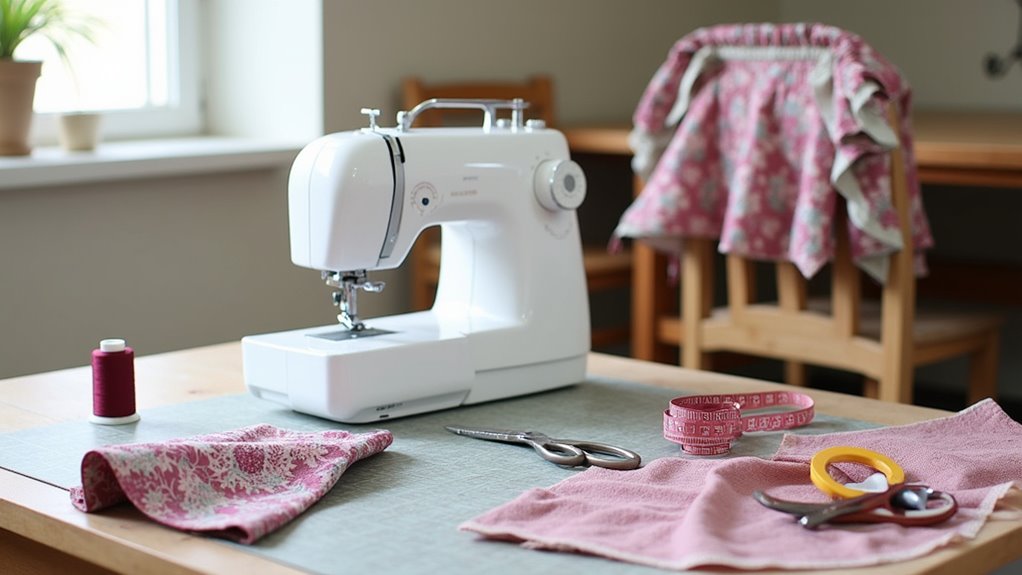
Adding a skirt to your chair covers boosts style and hides imperfections. Here’s how to do it:
- Select your fabric: Use strong, medium-weight fabrics like dropcloth canvas for durability.
- Pick a skirt style: Consider pleats or ruffles for added charm and character.
- Finish the edges: Overlock the raw edges to stop fraying. Press the hems for a sharp look. Additionally, ensure that you measure the chair’s dimensions accurately to achieve the best fit for your skirt.
Explore different skirt styles and fabric textures. Your chair covers will look fantastic!
If you spill something, just think of it as a chance to show off your new skills.
Including Elastic, Ties, or Closures
Chair covers can really stand out with elastic, ties, or closures. Elastic gives your covers a snug fit. This is great for chairs with tricky shapes. Leave openings in the seams for easy elastic placement.
Decorative ties not only keep your covers secure but also add style. They can be cut from matching fabric for a perfect look.
Closures like zippers offer a clean look and easy removal. Place zippers under flaps to keep them hidden.
Here’s a helpful table to guide you:
| Feature | Benefits | Tips |
|---|---|---|
| Elastic | Snug fit for odd shapes | Use safety pins for insertion |
| Decorative Ties | Adjustable fit, adds style | Cut from matching fabric |
| Closures (Zippers) | Clean look, easy removal | Place under flaps for stealth |
Frequently Asked Questions
What Type of Fabric Is Best for Chair Covers?
Choosing fabric for chair covers requires thought. Consider how long the fabric will last. Natural fibers like cotton and linen feel soft and comfy. They work well for indoor settings. Synthetics like polyester are strong and easy to clean. They resist stains and wear.
Think about your needs. Do you have kids or pets? Pick something durable if yes. What style do you like? Bright colors or neutral tones? Your choice should match your home decor.
How Do I Clean and Maintain My Chair Covers?
To keep your chair covers fabulous, follow these steps. First, always check the washing instructions. Use a gentle cycle to protect the fabric. Avoid harsh chemicals; they can damage the material.
Regular care is essential. Vacuum the covers to remove dust and crumbs. Spot clean stains right away to prevent them from setting in.
For deep cleaning, wash covers as needed. Make sure to air dry them. This helps maintain their shape and color.
Can I Use a Sewing Machine for Thicker Fabrics?
Using a sewing machine for thicker fabrics is a great idea. Heavy-duty or industrial machines work best for this. They can handle the extra weight and thickness without trouble.
Choose the right needle size for thicker materials. A larger needle helps pierce through heavy fabric easily. Adjust the presser foot pressure too. This ensures the fabric feeds smoothly while sewing.
Try using a walking foot if you have one. It helps move thick fabrics evenly. Don’t forget to use strong thread as well. This prevents threads from breaking during sewing.
With the right machine and settings, sewing thick fabrics can be simple and fun. Enjoy your sewing projects!
How Do I Choose Colors and Patterns for My Chair Covers?
Colors and patterns for chair covers can transform your space. Think about color psychology. Colors can change how people feel. For example, blue can make a room calm, while yellow brings energy.
Patterns also add fun. Mixing different patterns can create a lively look. Stripes can pair well with florals. Just keep balance in mind.
Choose colors that match your room’s style. Warm colors like red and orange create warmth. Cool colors like green and blue feel fresh.
Don’t be afraid to experiment. Use samples to see how they look together. Let your chair covers reflect your personality. Make your space inviting and stylish!
What Tools Are Essential for Sewing Chair Covers?
To sew chair covers, you need some important tools. A heavy-duty sewing machine is a must. Sharp scissors help cut fabric easily. Use durable thread for a strong finish. Pick the right fabric for comfort and style. Learn some basic sewing techniques. This will help you create a nice look. With these tools, your chair covers will be professional and last a long time. Enjoy your sewing project!
Conclusion
Crafting chair covers is a fun project. It can also save you about 30% compared to buying them in stores. Get ready to unleash your creativity! Mistakes can happen. Just see them as unique design features. With practice, you will become a pro at making chair covers. Take on this DIY challenge with confidence! Enjoy the process and have fun transforming your chairs. High-five for your new skills!