
How to Repair a Fake Leather Chair
This post contains affiliate links. As an Amazon Associate, we earn from qualifying purchases.
Repairing a fake leather chair can restore its appearance and extend its life. Start by cleaning the chair with a specialized leather cleaner, then assess the damage and trim any loose pieces. Use a leather filler for tears, applying it in thin layers and allowing each layer to dry. Once the surface is smooth, use water-based paint that matches your chair’s color, applying it in light coats for a polished look. For those interested in more tips and tricks, further details will be provided later in the article.
Essential Facts in 30 Seconds
- Clean the chair with a specialized leather cleaner before assessing damage.
- Use leather filler for cracks and tears, applying in thin layers and allowing to dry between applications.
- Paint repaired areas with water-based chalk or leather paint for a seamless finish.
- Consider alternatives like nail polish for scratches or reupholstering for heavily worn chairs.
- Evaluate the overall condition to determine if repair is worthwhile or if replacement is more cost-effective.
Understanding Faux Leather Damage
A faux leather chair is stylish but needs care to stay looking good. Direct sunlight can fade its color. Dry air can cause cracks. Heat from radiators makes the material dry and brittle. Natural leather’s longevity surpasses that of faux leather, making it essential to monitor your chair’s condition. Regularly assessing the damage can help you determine the best repair approach. Additionally, performing regular color matching checks can help maintain its appearance and prevent further deterioration. To prolong the life of your faux leather, consider using leather conditioner specifically designed for synthetic materials.
Watch for signs that your chair is getting old. Fading, cracking, or peeling are bad signs. Scratches from pets or moving furniture can make things worse. Keeping an eye on these issues helps your faux leather chair last longer. A little wear and tear? Don’t worry! Fixing it can be a fun DIY project.
Preparing for Repair
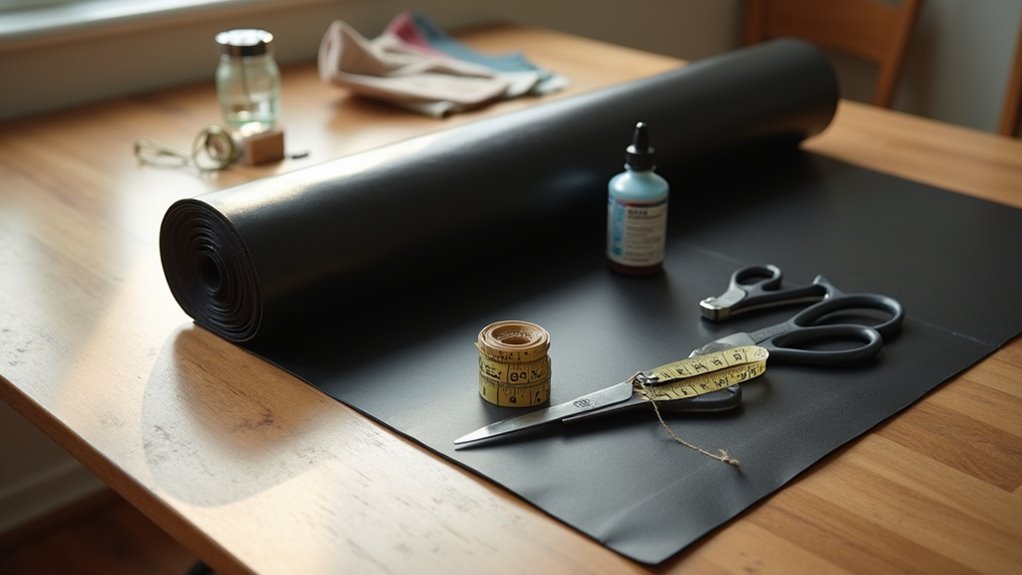
You’ve noticed wear on your faux leather chair. It’s time to prepare for some repairs! Start by getting a specialized leather cleaner. Clean the entire chair, paying extra attention to damaged areas. This removes dirt and oils. You want a clean surface for your repairs.
Let the chair dry completely. Moisture can cause problems later.
Next, assess the damage. Look for scratches, peeling, or tears. Measuring the size and extent of the damage will help you determine the best approach for repair. Trim any loose edges around tears. This creates a smooth surface for repairs. Think of it as giving your chair a fresh haircut! Understanding types of damage is essential for selecting the best repair method, especially since smaller tears are generally easier to fix. Additionally, evaluating scratch depth will help you identify the most effective repair techniques.
Make sure you have all your tools ready. You need rubbing alcohol for degreasing and adhesive for fixing. A leather repair kit can also be beneficial for more extensive repairs, ensuring you have essential tools on hand. With everything organized, you’re set to tackle the repair. Let’s make that chair look great again!
Using Leather Filler for Repair
Using leather filler can revive your faux leather chair. Start by cleaning the damaged area. Remove any peeling bits using fine sandpaper or a blade. This prepares the surface for repair. A proper assessment of damage is crucial for effective repair. Additionally, it’s important to clean the area around the damage thoroughly before starting the repair process.
Next, grab a putty knife. Spread the filler in thin, even layers. Let each layer dry for about 30 minutes. This helps the filler bond well with the chair. It stays put, just like a loyal dog! Understanding the cost of genuine leather can help you appreciate the value of your faux leather repairs. Regular cleaning is also essential to maintain the overall appearance of your chair.
For larger holes, use heavy fillers. They’re flexible and work great for big repairs.
Once everything is dry, sand it lightly for a smooth finish.
With a little patience and care, those annoying scuffs will disappear. Enjoy your DIY skills!
Painting and Color Restoration
After giving your faux leather chair a fresh start with leather filler, it’s time to bring it back to life with paint and color restoration.
Start by cleaning the surface well. Use a mild detergent or a TSP alternative. This step is like giving your chair a nice bubble bath. A microfiber cloth works best for this job. Cleaning the surface thoroughly helps to remove dust and debris, ensuring optimal adhesion of the paint.
For paint, water-based chalk paint is an excellent choice. It’s easy to apply and clean up. Specialty paints made for leather, like Fusion Mineral Paint, are also great options.
Apply thin, even coats of paint to avoid brush strokes. Rollers can help speed things up. Misting with water helps the paint soak in nicely.
Let each layer dry for about an hour before adding more. Your chair will shine like new in no time! Regular dusting and cleaning will help keep your faux leather chair looking fresh and vibrant, ensuring that you maintain its aesthetic appeal.
Exploring Alternative Repair Options
Faux leather chairs can show wear over time.
Fortunately, many repair options exist to refresh them. Minor issues can be fixed quickly or you can choose longer-lasting solutions. Here are some great ideas:
- Nail polish fixes: Use nail polish to cover scratches or small peeling spots.
- Real leather replacement: For heavily worn chairs, consider replacing faux leather with real leather, as this provides a durable and long-lasting solution for comfort. Additionally, reupholstering parts offers a method to restore chairs that are extensively damaged.
- Rubberized coatings: These coatings add strength and flexibility to your chair.
- Reupholstering parts: Replace damaged sections with new faux leather to restore the look.
- Professional restoration: For serious damage, a professional repair service can help.
Additionally, you may assess the damage before deciding on the best repair method.
With these tips, your chair can look fabulous again!
Bring back its charm today!
Recognizing Limitations and Longevity of Repairs
Repairing materials like bonded or faux leather can be tricky. These materials often peel and flake. This makes it hard for repair products to stay strong. Whether you use filler putty or color touch-ups, patches may fade or peel later. In fact, regular maintenance is crucial to prolonging the lifespan of faux leather items. Regular cleaning, such as using a natural cleaner like vinegar and olive oil, can help maintain the appearance even in faux leather, but the effectiveness may vary.
Sunlight and humidity can speed up damage. Heavy use from kids and pets can also affect repairs. Plus, if the color or texture isn’t a perfect match, your chair can look patchy. Regular cleaning and conditioning can help maintain the appearance even in faux leather, but the effectiveness may vary.
Before you start repairs, consider the material and the chair’s lifespan. Sometimes, buying a new quality piece is a better choice.
Frequently Asked Questions
Can I Use Regular Paint Instead of Leather Paint for Repairs?
Regular paint is not suitable for leather repairs. It doesn’t stick well and fades quickly. Leather needs special paint designed for its surface. Leather paint lasts longer and keeps its color. It also bends with the material, preventing cracks. For the best results, always choose leather paint for your repairs.
How Can I Prevent Future Peeling on My Faux Leather Chair?
Many faux leather chairs peel because of poor care. About 70% of them face this problem. To prevent peeling, keep the humidity level right. Clean your chair often. Use a soft cloth and mild soap. Avoid harsh chemicals. They can damage the faux leather. Take care of your chair. This will help it last much longer. Enjoy your chair without the worry of peeling!
Is It Safe to Use Heat to Fix Faux Leather Damage?
Using heat on faux leather is not safe. It can cause serious damage. You might see peeling or discoloration. This damage is often permanent. Instead, look for other ways to fix faux leather. Use gentle cleaning solutions. Try patching or using special faux leather repair kits. These methods help keep your items looking good. Always test any method on a small area first. Protect your faux leather for a longer life.
What Tools Do I Need for a DIY Faux Leather Repair?
Gather these tools for a DIY faux leather repair. You need a repair kit to fix small tears and scratches. Choose a strong adhesive to bond the materials. Palette knives help spread the adhesive smoothly. Brushes are great for applying color evenly. Use colorants to match the faux leather shade. A clear coat gives a nice finish and protects the surface. With these tools, you can restore your faux leather easily and effectively. Enjoy your project!
How Long Does a Faux Leather Repair Typically Last?
Faux leather repairs usually last between 6 months and 2 years. The time depends on the quality of the faux leather and how much you use it. Proper care can help your repairs last longer. Regular cleaning and conditioning keep the material in good shape. Avoid harsh chemicals that can damage it. Store items away from direct sunlight to prevent fading. Follow these tips to enjoy your faux leather for years.
Conclusion
You’ve turned your faux leather chair from drab to fab! Giving it some care can breathe new life into it. Every scratch tells a story. Now, you have the skills to keep those stories looking great. Use a filler or a splash of paint to fix it up. Grab your supplies and roll up your sleeves. Keep that chair comfy and stylish for years. Celebrate your DIY skills!