
How to Repair a Torn Leather Chair
This post contains affiliate links. As an Amazon Associate, we earn from qualifying purchases.
To repair a torn leather chair, begin by assessing the damage and cleaning the area with leather cleaner followed by rubbing alcohol for a strong bond. Next, insert a sub-patch under the tear, secure it with strong adhesive, and smooth it out. Complete the repair with filler and dye to match the original color. Additional tips and detailed instructions will be provided later in the article for those seeking a more in-depth guide.
Essential Facts in 30 Seconds
- Assess the damage, noting scratches, gouges, or discoloration.
- Clean the area with leather cleaner and let it dry completely.
- Use a strong adhesive to attach a sub-patch beneath the tear.
- Fill the tear with leather filler and dye to match the original color.
- Seal the repair and maintain the chair by conditioning it regularly.
Assessing Damage and Selecting Materials
Spotting damage on your leather chair is easy. First, use a magnifying glass. Look for scratches and gouges. They can hide well. Run your fingers over the surface. Feel for any rough spots. Discoloration or fading means it needs attention. Press the leather gently. If it sags, that’s a big problem. Unusual smells can mean hidden stains too. The extent of damage can vary based on the type of leather and the size of your pet, so assessing thoroughly is crucial. Additionally, look for any signs of overall condition as it can impact the repair approach.
Choosing repair materials matters. They must match your chair’s leather type. For small scratches, leather conditioner works well. Larger tears need patches. Use the right tools for best results. Cleaners, adhesives, and fillers help make your repairs strong. Applying leather repair glue is a critical step for ensuring a secure hold during the repair process.
You can do this! Soon, your chair will look brand new. Roll up your sleeves and start fixing!
Preparing the Damaged Area
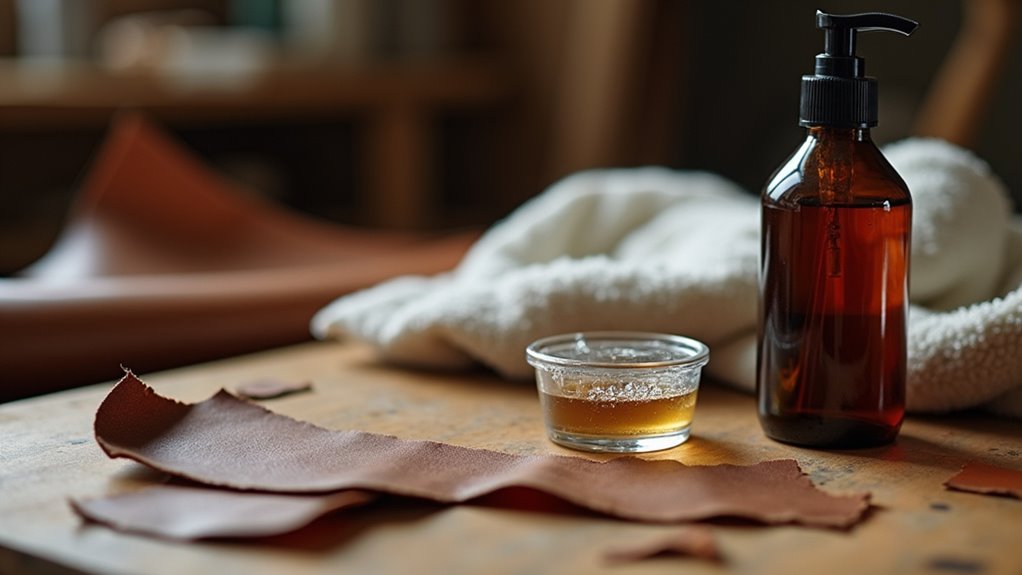
Preparing the damaged area of your leather chair is key for a great repair. Start by cleaning the surface well. Use a leather cleaner to remove dirt and oils. This ensures a clean area for the repair. Let the surface dry completely to avoid water spots. Additionally, make sure to clean the area with rubbing alcohol to further ensure proper adhesion. Cleaning promotes better adhesive bonding, which is essential for a successful repair. A thorough damage assessment helps determine the best approach for the repair.
Next, trim any frayed edges with scissors or a utility knife. This makes the area smooth. Use fine-grit sandpaper to gently sand away scratches and cracks. Check everything closely to catch any remaining debris or imperfections.
With the area prepared, you’re ready for a successful repair. Proper deglazing is crucial to ensure absorption of the coloring balm, so take your time to complete this step effectively. Great job on your hard work! Keep going strong with this project!
Inserting the Sub-Patch
Let’s get that sub-patch in place!
Start by picking a fabric that matches your leather. Think of it like finding the right dance partner. A good choice is to look for a fabric that is durable and blends well with the leather’s texture for optimal repair results. Proper cleaning is essential for effective repairs, so ensure the area around the tear is clean and dry. Make sure to choose a strong adhesive that is compatible with leather for a successful bond during the patching process.
Use tweezers to slide the fabric under the tear. Make sure it’s flat and snug. It should fit like a puzzle piece—no bulges allowed! This will make your repair look neat and strong. Take your time and be careful. Remember, inserting a sub-patch material is essential for structural support during the repair process.
Good luck!
Choosing the Right Fabric
Choosing the right fabric for your leather chair patch is key to a successful repair. For real leather chairs, use genuine leather patches. They match the texture and last longer. Regular cleaning and conditioning can prevent future cracking and extend the life of your leather chair.
For synthetic leather, try PU or PVC patches. Make sure they fit your chair well. Vinyl patches also work great for vinyl furniture. Avoid bonded and faux leather; they wear out quickly. Regularly applying leather conditioner can help with repairs underneath. But these aren’t for visible patches. Regular maintenance can help prevent future damage to your leather chair.
Find the perfect patch to make your chair look good again. You’ve got this!
Proper Placement Techniques
Now that you have the perfect fabric for your patch, it’s time to place the sub-patch!
Use tweezers or a small tool to slide the patch under the tear. Make sure it covers the hole completely. A 1 cm border around the hole helps with alignment. Press it down firmly to keep it in place. Additionally, remember that removing stains from leather should be done carefully to avoid damage. Regular maintenance, such as cleaning and conditioning, can also help prevent future wear and tear.
Apply a thin layer of flexible leather adhesive around the edges of the patch. This helps it stick well. Additionally, ensure the area is thoroughly cleaned before applying the patch to promote better adhesion.
Allow the adhesive to cure completely. This step is key for a strong hold. Use a pin if needed to keep everything steady while it dries.
With a little patience, your chair will look great again soon!
Applying Adhesive and Securing Patch
Get that adhesive ready to do its job!
First, choose a glue that works well with leather. This glue should bond strongly, like a superhero’s cape.
Apply it thin and even. Think of spreading peanut butter, not frosting. This way, your patch sticks well and lasts a long time!
Selecting the Right Adhesive
Choosing the right adhesive makes leather chair repair easy. A strong, water-resistant glue will help. Flexibility is important too, so repairs stay intact when you sit. Some glues work on both real and faux leather.
Bostik Leather Repair Glue stands out. It dries clear and bonds well. Apply a thin layer on both surfaces before pressing them together. This helps create a strong bond. Additionally, ensuring the leather is clean and free from dust before applying the adhesive will enhance the bond’s effectiveness and longevity, as regular dusting prevents dirt buildup. Proper preparation is crucial for a successful repair, so be sure to follow the cleaning steps outlined in your repair process. Regular cleaning with a vinegar and olive oil mixture can also help maintain the leather’s condition.
Patience is key. Let the glue set for a few hours. Soon, your chair will look as good as new. No special skills are needed!
Proper Application Techniques
Getting the adhesive right is just the start of fixing your leather chair!
First, clean the damaged area with a rag and rubbing alcohol. This gives your chair a mini spa day. Trim any loose edges for a smooth surface.
Now, let’s talk about adhesives. Apply a thin, even layer of leather adhesive on the back of the patch. Use small brushes for better control. For contact cement, spread it on both surfaces for a stronger hold.
Carefully align the patch over the tear. Press it down firmly. No air bubbles allowed! Use clips or weights to keep it in place as it dries. Remember to apply a high-quality leather conditioner afterward to maintain the integrity of your repair.
You can do this!
Ensuring Strong Bonding
Before applying adhesive, make sure your leather is clean. Wipe the surface with mild soap and water or rubbing alcohol. This removes dirt and oils. Trim any frayed edges for a smooth finish.
For smooth leather, use fine-grit sandpaper. This helps the adhesive stick better.
Select the right adhesive. Cyanoacrylate works for quick fixes. Leather-specific adhesives offer more flexibility. Apply a small amount to the edges. Press the patch down firmly. Use a clamp to hold it in place.
Wait for the adhesive to cure. This step is crucial for a strong bond. Ink stain removal can be manageable with the right approach. Patience pays off!
Filling and Refinishing the Surface
Filling and refinishing a torn leather chair is easy. Follow these steps to make your chair look new again.
Start by cleaning the tear with denatured alcohol. This helps remove dirt and oils. Trim any loose threads around the tear.
Next, pick a leather filler that matches your chair. For bigger holes, use a denim patch for support. Apply the filler with a palette knife. Smooth it out with a card to make it even. Let it dry completely. Lightly sand it if needed. Add texture to match your chair. Blend the edges for a natural look.
For refinishing the surface, use a leather dye to match the original color. Seal it with a clear coat. Buff it for a shiny finish.
Your chair will look fantastic! You did it!
Additional Tips and Techniques
Repairing a torn leather chair is easier than it seems. With some simple tips, you can do it well. Here are some helpful suggestions:
- Use repair kits: These kits include patches and adhesives. They make the job simple.
- Texture matching: After gluing the patch, match the leather’s texture. Use grain paper and a little heat from an iron for best results.
- Clean and prep: Always clean the surface first. A smooth area helps the glue stick better.
- Be patient: Let the glue cure fully before using the chair. Waiting is worth it!
Follow these steps, and your chair will look great again!
Maintaining Your Leather Chair
Keeping your leather chair in great shape is easy. Follow these simple steps to maintain its beauty. Regular cleaning is important. Dust your chair with a microfiber cloth. Use a soft brush to vacuum any small spaces.
Spills happen. Blot spills right away. For tough stains, try mild soap and water.
Here’s a useful table for your maintenance routine:
| Task | Frequency | Tips |
|---|---|---|
| Regular Cleaning | Weekly | Use a dry microfiber cloth |
| Conditioning Leather | Every 4-6 months | Apply with a circular motion |
| Environmental Care | Daily | Keep away from heat and sunlight |
| Use Protective Covers | As needed | Great for homes with pets! |
| Inspect Leather | Monthly | Check for wear or dryness |
With these steps, your leather chair will stay cozy and stylish for years. Remember, quick action makes stains disappear. Happy cleaning!
When to Seek Professional Help
Sometimes, a tear or scratch on your leather chair looks too big to fix. It can be tough to decide if you need help.
Here are clear signs to call a professional:
- Big Damage: Large or deep tears need expert help. DIY fixes may not work.
- Valuable Pieces: Antique chairs need special care. Don’t risk their value with poor repairs.
- Failed Attempts: If your fixes don’t work, it’s time to get a pro’s advice.
- Complex Issues: For big tears or structural damage, pros have the tools and skills needed.
Taking these steps can save time and money.
Frequently Asked Questions
Can I Use Regular Glue Instead of Leather Adhesive?
Regular glue can work for fast fixes on leather, but it won’t last long. Leather adhesive is much better for repairs. It is made to be flexible and strong. This type of glue creates a better bond than regular glue. For lasting results, always choose leather adhesive for leather items.
How Long Does the Repair Process Take?
Repair time usually takes one to two hours. The exact time depends on how much damage there is. Larger problems may take longer.
Drying times are also important. Make sure to let things dry properly. Patience is key for good results. Quick fixes can lead to bigger issues later. Always give yourself enough time for proper repairs.
Is It Safe to Use Heat During Repairs?
Using heat during repairs can be safe with the right techniques. Keep a moderate distance from the leather. Limit how long you apply heat. Choose low-heat settings. This helps prevent damage while ensuring strong adhesion and a good finish. Always be careful and watch closely while using heat. It’s important to get it right for the best results.
What if the Leather Color Doesn’t Match?
Leather color mismatches can be a challenge. Using effective color matching techniques can help. Start by exploring different leather dye options. Mixing hues may lead to a better match. Always test small samples first. This ensures you find the closest color. A perfect blend can change the look of the entire piece. Take your time to get it right. The right color makes all the difference.
Can I Repair Faux Leather Using These Methods?
You can repair faux leather using different methods. Superglue and filler are popular options. These repairs can help fix small tears or scratches. Keep in mind, though, that these fixes may not last long. Faux leather is not very strong. It can wear down easily.
For best results, clean the area before applying any repair product. Use a soft cloth and mild soap. After cleaning, let it dry completely. Then, apply the superglue or filler. Follow the instructions on the product for the best outcome.
Conclusion
You repaired that torn leather chair like a pro! Now, take a moment to enjoy your work. Sit back and relax in your chair. It feels great, right?
To keep your chair looking nice, clean it regularly. Use a leather conditioner to keep it soft. A little care goes a long way.
If a big tear shows up, call a professional. They can fix it right. Your chair is ready for cozy movie nights again! Enjoy your comfy spot!