
How to Reupholster a Chair Seat
This post contains affiliate links. As an Amazon Associate, we earn from qualifying purchases.
Reupholstering a chair seat is a straightforward process that can refresh its look and comfort. Begin by flipping the chair over and unscrewing the seat. Remove the old fabric and inspect for any cracks, replacing the padding if necessary for optimal comfort. Cut your new fabric, making sure to leave extra on the sides for wrapping. Secure it with staples, starting in the center and pulling tight. Pay special attention to the corners; fold them neatly for a polished finish. For those interested in enhancing the look further, stay tuned for additional decoration tips!
Essential Facts in 30 Seconds
- Flip the chair upside down and unscrew the seat to inspect the frame for stability.
- Measure the chair seat accurately and mark cutting lines lightly, allowing extra fabric for wrapping.
- Select durable upholstery fabric and padding that match the chair’s style for comfort and longevity.
- Begin stapling fabric from the center of one side, pulling tight to avoid wrinkles.
- Neatly fold and secure fabric at corners for a professional finish.
Tools and Materials Needed
Before reupholstering that chair seat, gather your tools and materials. Start with a tack puller to safely remove tacks. A flat head screwdriver can be handy too. Pliers help pull out staples. An awl loosens stubborn staples with ease.
Next, get a pneumatic staple gun. It fastens everything securely. Your hands will appreciate this choice! For cutting fabric, use professional fabric shears or utility knives. A measuring tape ensures accurate sizes. Remember, using professional tools not only improves efficiency but also enhances the quality of your work. Additionally, consider using a staple gun to ensure that the fabric is attached securely and evenly.
Make sure to prepare new fabric by measuring and cutting it properly for a smooth finish. Choosing the right foam padding will also significantly enhance the comfort of your chair.
Don’t forget upholstery foam and batting for comfortable padding. Tack strips will help finish the edges neatly.
With everything ready, let’s make that chair look fabulous! Spilled ketchup? No problem! We’ll make that stain disappear like magic!
Preparing the Chair and Seat
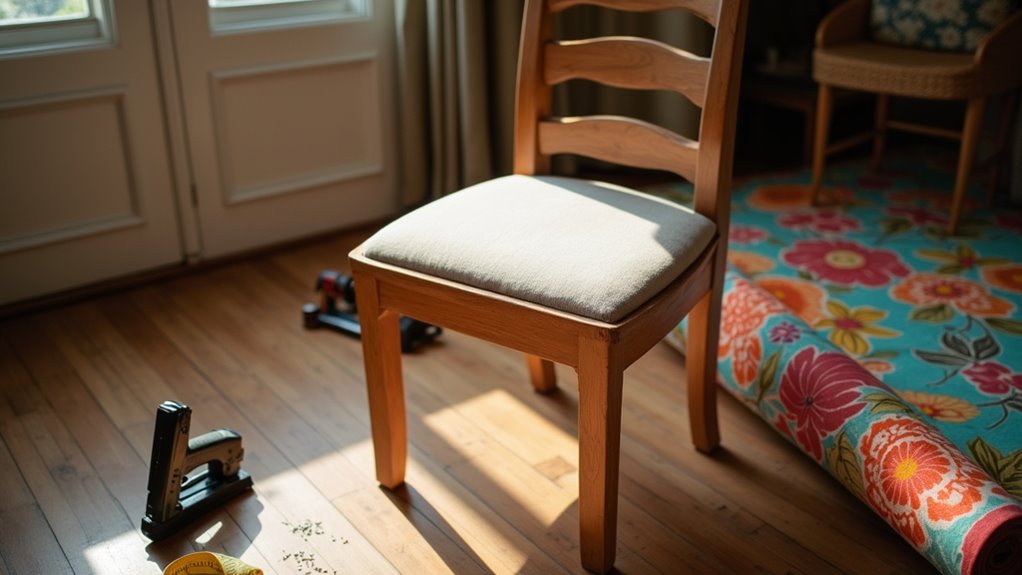
Get the chair ready for its makeover!
First, flip the chair upside down. Unscrew the seat carefully. This step is like a secret mission.
After removing the seat, check the frame. Look for cracks or wobbles that need fixing. Assess your furniture to ensure it is stable and ready for reupholstering. Make sure to conduct a thorough inspection of all joints to identify any potential issues before proceeding. If you find any cracks, consider using wood glue to ensure a strong repair before moving on to reupholstering. Additionally, make sure to avoid damaging the wood underneath while removing old upholstery.
Don’t forget to take off the old fabric. It’s time for a fresh start, just like cleaning out your backpack!
Flip and Unscrew Seat
Getting ready to reupholster your chair seat is like starting a fun DIY project.
First, flip the seat over. This lets you see the screws or bolts underneath. Use a screwdriver or wrench to carefully unscrew all the fasteners. Keep them organized for later use.
Once everything is loose, gently lift the seat off the frame. Avoid using too much force.
Place the seat comfortably on your workspace. This helps prevent slipping. Additionally, assessing chair structure before reupholstering is crucial for ensuring the longevity of your project. Make sure to check the foam padding condition to determine if it needs replacement. Using durable fabric is also important for a lasting finish.
Flipping the seat lets you see how the old upholstery was attached. This gives you clues about the fastening techniques to use. Additionally, reupholstering is a sustainable option that extends the life of your furniture, making it both eco-friendly and stylish.
You can make that seat fabulous again!
Inspect and Repair Frame
Inspecting and repairing your chair frame is a key step in your reupholstering project. A solid frame makes a big difference.
Start with a careful check of the frame. Here’s what to look for:
- Check for cracks, splits, or breaks in the wood or metal.
- Ensure all joints are secure and not wobbly.
- Look for signs of wood rot or insect damage.
- Assess leg stability and attachment points.
After finding any problems, apply some repair techniques. Repairing a loose chair leg can prevent further instability in your chair. Tighten any loose joints. Fill small cracks and replace missing screws. Clean and prepare the surface for the new fabric. Additionally, be sure to repair a broken leg if you identify any significant damage during your inspection. It’s crucial to evaluate the damage thoroughly before proceeding with repairs to ensure long-lasting stability.
Following these steps leads to a sturdy and beautiful chair!
Remove Old Fabric
Time to remove that old fabric from your chair! First, flip the chair upside down.
Use a flathead screwdriver to pull out the staples. Be careful; some staples can be sharp. For stubborn staples, pliers work well. A razor blade can help cut around really stuck ones.
Keep the fabric pieces as templates. They’ll help you cut the new fabric perfectly. Additionally, make sure to take pictures for reference to assist with the reupholstering process. It’s also a good idea to inspect for damage to padding or frame before proceeding with new upholstery. During this inspection, check the condition of the upholstery foam to determine if it needs replacement.
Spray some disinfectant while you work, especially on secondhand chairs. No one wants mystery smells!
Cutting and Preparing New Materials
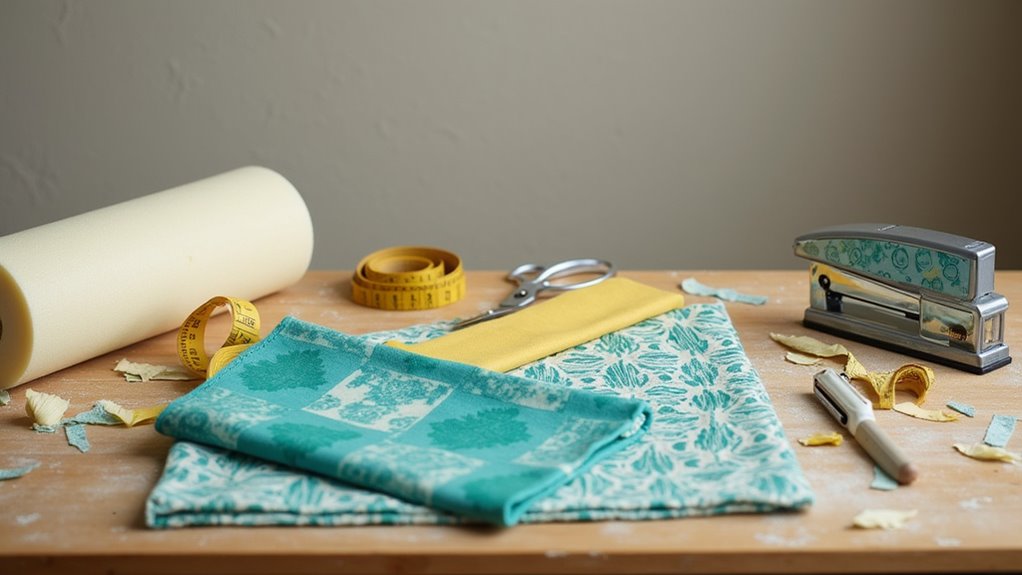
Before cutting and preparing upholstery materials, measure your chair seat accurately. This helps avoid fabric that’s too short or too long. Follow these simple steps:
- Measure the length, width, and thickness of your chair seat.
- Add 3-4 inches on all sides for wrapping around the base.
- Think about seam allowances and matching any patterns.
- Look at the shape of your seat to cut curves or corners easily. Additionally, ensure you have the necessary tools and materials needed for recovery to make the process smoother.
Use upholstery-weight fabrics. They’re very durable and can withstand the wear and tear of everyday use.
Lay your fabric flat on a stable surface. Use sharp scissors or a rotary cutter for clean edges. Mark your cutting lines lightly with tailor’s chalk.
These tips will help you cut like a pro. Good luck with your project!
Attaching New Padding and Fabric
Attaching new padding and fabric to your chair is an exciting task!
Start by picking materials that are both comfy and stylish. This choice is key for a great result. Using high-quality leather can enhance both the look and durability of your chair.
Next, grab your stapler and begin at the center of the seat. This method helps avoid wrinkles. Work your way outwards to the edges.
Corners should be neat and tight, just like a beautifully wrapped gift.
Take your time. Ensure everything looks perfect. Remember to secure fabric properly with a staple gun to keep the padding in place. Enjoy your newly updated chair!
Choosing Appropriate Materials
Reupholstering a chair seat can be a fun project. Picking the right materials is essential for success. Here’s a simple guide to help you.
- Natural Fibers: Use cotton, linen, or wool. They feel soft and cozy. Be careful, though. They can stain easily.
- Synthetic Fibers: Polyester and vinyl are strong and budget-friendly. They resist stains well, making them great for kids or messy eaters.
- Padding Types: Foam gives comfort. Batting smooths edges. Rubberized coir feels firm. Down offers a soft, luxurious touch.
- Fabric Selection: Choose heavier fabrics like canvas for thicker padding. Think about how the fabric will look and last over time.
With the right materials, your chair will look amazing and last long. Enjoy your project!
Stapling Techniques Explained
Getting your materials ready is just the start of your reupholstering journey.
Now, it’s time to make everything stick! Start by stapling at the center of one side, usually the front. This helps with fabric alignment and tension. Pull the fabric tight and staple outward to the edge.
Then, move to the opposite side. Tack loosely at first to check the look.
Use a staple gun with 1/4 to 1/2 inch staples for the padding and fabric. Keep the fabric tension just right. It should feel snug but not overstretched.
Pull too hard? Take a breath and relax. Your chair will look amazing soon!
Corner Finishing Tips
Corner finishing is a rewarding part of reupholstering a chair.
Follow these easy steps for perfect corners:
- Cut the foam a bit larger than the seat. This allows for wrapping.
- Staple the fabric along the edges. Leave 2-3 inches from the corners for folding.
- Fold the fabric back at the corners. This helps reduce bulk and creates a neat edge.
- Pull the fabric tight, but not too tight. This keeps it smooth before stapling.
With these steps, your corners will look professional.
Mistakes are okay; they help you learn, just like in video games!
Reinstalling the Seat
Reinstalling the seat on your newly upholstered chair is the exciting finish of your DIY project.
Start by lining up the seat base with the chair frame. Make sure the holes match perfectly. Use screws or bolts to secure it, but don’t over-tighten. Your frame needs some love, too!
Check the seat stability. Gently push down on all sides. If it wiggles, tighten it a bit more.
Now, take a moment to admire your work. Look at the fabric alignment. Ensure those corners are tucked in nicely with no wrinkles. If you find loose fabric, give it a little tug to fix it.
Once everything is snug, wipe away any dust.
Finally, sit down and rock gently. If it feels comfy, give yourself a high-five. You did it! Your chair is ready for its debut!
Tips for a Successful Reupholstering Project
A solid plan is key to reupholstering a chair. Think of it as your secret weapon!
Here are some helpful tips for your project:
- Measure Twice, Cut Once. Take exact measurements of your seat and padding. This is important, especially with tricky fabric patterns.
- Choose Wisely. Pick durable upholstery fabric that matches your chair style and personal taste.
- Padding Up. Check the padding. Replace worn areas for comfort. Adding a layer of batting makes it cozier.
- Smooth Operator. Start stapling the fabric from the center. Work your way out to avoid wrinkles.
With good planning and some creativity, you can turn that old chair into a stylish piece.
Get ready to reupholster!
Common Mistakes to Avoid
You’ve got your plan ready to give that chair a fresh look. Be careful of common mistakes that can slow you down. Here are some things to avoid:
| Mistake | Why It’s Bad | How to Fix It |
|---|---|---|
| Using thin fabric | It wears out quickly. | Pick a strong, durable fabric. |
| Ignoring pattern alignment | Patterns will look messy. | Take time to align them right. |
| Skipping padding checks | Your seat won’t be comfortable. | Always replace old padding. |
| Rushing measurements | You might waste fabric. | Measure twice, cut once! |
Follow these tips for a successful project. Enjoy transforming your chair!
Enhancing Your Chair With Decorative Elements
Decorating your chair can be enjoyable and creative! Adding fun details makes your chair stand out. Here are some ideas to consider:
- Gimp or Tassel Fringe: These trims add a playful touch. They also cover staples for a neat finish.
- Nailhead Trims: These give a rustic feel or a touch of sparkle.
- Contrast Piping: This makes edges pop. It highlights fabric patterns beautifully.
- Buttons and Tufting: They add elegance and texture. This creates a stunning look.
These elements can transform your chair into a unique piece. Enjoy the process!
Frequently Asked Questions
How Do I Choose the Right Upholstery Fabric?
Choosing the right upholstery fabric is important. Think about durability first. Fabrics like polyester withstand heavy use. They are great for busy areas in your home.
Next, pay attention to color and patterns. Bright colors can add energy. Subtle tones help create a calm space. Match the fabric to your decor and personal style.
Consider texture too. Soft fabrics feel nice and inviting. Smooth finishes are easy to clean.
Always test the fabric. Rub it and see how it holds up. This way, you ensure it fits your needs.
With the right fabric, your furniture will look great and last long.
Can I Reupholster Without Removing the Old Fabric?
Reupholstering furniture can be easier than you think. You don’t always need to remove the old fabric. If the old fabric is in good shape, you can add new fabric right on top. Make sure the old fabric is clean and flat. It should not show through the new covering. This method saves time and effort. Enjoy a fresh look without the hassle!
What Type of Staple Gun Is Best for Upholstery?
For upholstery work, electric staple guns are the best choice. They make tasks easier and faster. For lighter jobs, a manual staple gun is also a good option. It gives you more control. Think about your project and what feels comfortable for you. Choose what suits your needs best. The right tool makes your work easier and more enjoyable.
How Much Fabric Should I Buy for My Chair?
To find out how much fabric to buy for your chair, start by measuring its dimensions. Use a fabric yardage calculator for accuracy. Take into account the size and shape of the chair. Always add extra fabric for seam allowances. Consider any patterns on the fabric that need matching. This way, you ensure a perfect fit and a polished look.
Are There Environmentally Friendly Upholstery Options Available?
There are many environmentally friendly upholstery options available today. Sustainable fabrics like organic cotton, linen, and hemp are great choices. These materials help protect our planet. They also make your furniture last longer.
Organic cotton comes from plants grown without harmful chemicals. This means less pollution and safer for the earth. Linen is made from flax plants. It uses fewer resources and is very strong. Hemp is another fantastic option. It grows quickly and needs little water.
Choosing eco-friendly upholstery is good for your home and the environment. Feel good about your choices. Make your space beautiful and safe.
Conclusion
Reupholstering a chair is a fun way to give it a fresh look. With some patience and the right steps, you can do it yourself. Gather your tools: fabric, scissors, a staple gun, and a screwdriver.
Start by removing the old fabric. Take off any staples carefully. This will help you see the foam and wood underneath. Check the foam. If it’s damaged, replace it with new foam for comfort.
Next, cut your new fabric. Make sure it’s big enough to cover the seat and wrap around the edges. Lay the fabric on a flat surface, then place the seat on top.
Pull the fabric tight and start stapling it on the underside of the seat. Be careful to keep it smooth and tight. Trim any excess fabric once you finish stapling.
Finally, reattach the seat to the chair frame. Look at your work! You just transformed your chair. Enjoy your stylish, new seat!