
How to Upholster a Chair
This post contains affiliate links. As an Amazon Associate, we earn from qualifying purchases.
Upholstering a chair can revitalize its look and extend its life. Begin by selecting a suitable fabric, either a soft natural cotton or a durable synthetic like polyester. Next, remove the old fabric and examine the chair’s structure. Cut your new fabric to size and securely attach it using a staple gun. Be sure to check for any loose threads and clean the chair thoroughly afterward. If you encounter any stains, a gentle cleaner will work wonders. For those interested in more detailed steps and tips, further explanations will follow.
Essential Facts in 30 Seconds
- Remove old fabric and padding; check for structural damage before upholstery.
- Cut new fabric accurately, ensuring grain alignment for a professional look.
- Use a staple gun to attach fabric tightly, starting from the center and moving outward.
- Clean the upholstered chair regularly; avoid direct sunlight to prevent fading.
- Use high-quality materials and techniques to enhance longevity in reupholstering.
Types of Upholstery Fabrics
Giving your chair a fresh look starts with picking the right upholstery fabric. There are two main types: natural fabrics and synthetic fabrics.
Natural fabrics include cotton and linen. Cotton is soft and versatile. Linen feels elegant and breathes well on warm days. Hemp is heavy, durable, and eco-friendly. Silk adds luxury, while wool is soft and strong. Wool is perfect for comfy chairs. Upholstery fabric can be impregnated for added protection against dirt and abrasion, which is beneficial for maintaining the fabric’s appearance over time. When recovering an office chair, consider foam padding to enhance comfort, especially if the original foam is worn. A good choice of fabric will also contribute to the overall durability of the chair. Choosing high-quality materials will ensure that your reupholstered chair remains in great condition for years to come.
Synthetic fabrics like polyester and microfiber work well for families. Polyester is tough and resists stains. It’s great for homes with kids or pets. Microfiber feels soft, like suede, but is easy to clean.
For outdoor furniture, polypropylene is a strong choice.
Choose the fabric that fits your style and needs!
Fabric Qualities Important for Upholstery
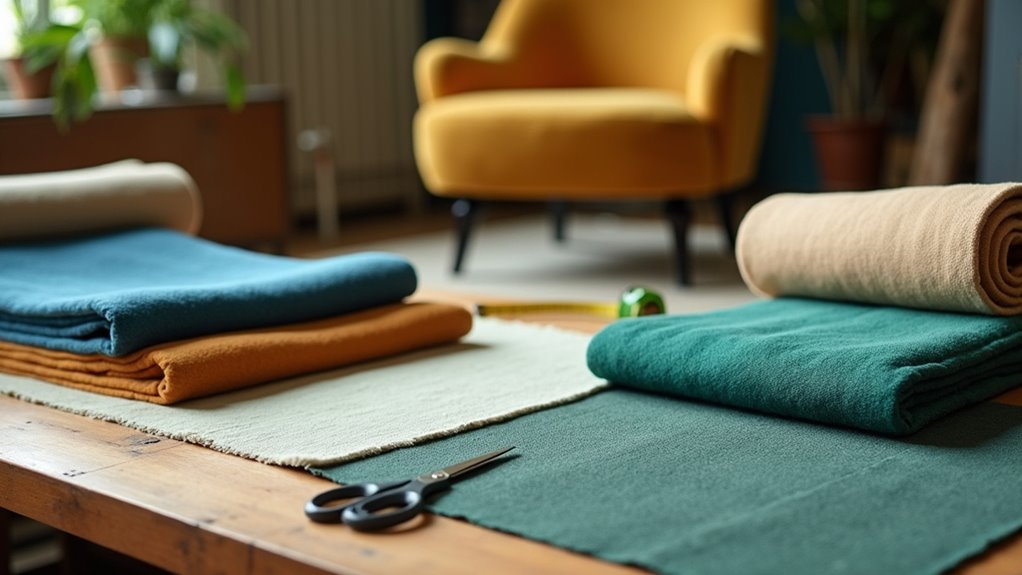
Upholstery fabrics can really change your chair. Here are some important qualities to consider.
Durability is very important. A double rub count of at least 15,000 is ideal for busy homes. This is especially true if kids or pets use the chair often. High-performance fabrics like leather or certain synthetics work well in high-traffic areas, making them suitable for durability and stain resistance. When choosing leather, consider its heavy-duty quality to ensure it withstands everyday use. Additionally, reupholstering dining chairs can significantly enhance the lifespan of your furniture, making it a worthwhile investment. Properly attaching the new fabric will also contribute to durability and ensure a lasting finish.
Stain resistance is another must-have. Fabrics with stain-resistant finishes, like Crypton or Sunbrella, handle spills well. Spilled ketchup? No problem! These fabrics make stains disappear. Microfiber is also great. It repels stains and is easy to clean.
Don’t overlook the weave. A tight, consistent weave means a stronger fabric.
Choosing durable and stain-resistant materials sets you up for success. Your chair will look great and last a long time. Happy upholstering!
Preparing the Chair for Upholstery
Prep your chair for upholstery like a pro. Start by removing the old fabric and padding. This gives you a clean start for your project. It’s also a great opportunity to assess the cushion’s condition before deciding on replacement. Additionally, you should inspect the condition of the foam padding used in the chair to determine if it needs replacing. Replacing worn foam with new foam ensures better comfort and support.
Make sure to check for damage to the chair structure, as this can affect the overall durability of your upholstery job.
Check the frame carefully for any damage. Repair any issues. A strong base is important.
Follow this quick list to stay on track:
- Take off parts like legs or cushions for easy access.
- Add new webbing to support your padding.
- Clear your workspace. This helps avoid accidents and keeps things moving smoothly.
With everything ready, you can enjoy picking the perfect fabric. Good prep makes a big difference.
Soon, your chair will look brand new and hide any old stains!
Cutting and Attaching Fabric
Cutting and attaching fabric makes your upholstery project come alive! Start by laying your fabric flat on a stable surface. This helps you cut straight. Use a ruler to guide your scissors for clean lines. Align your cuts with the fabric’s grain for the best look. Additionally, choose durable upholstery fabric to ensure your chair withstands daily use. Consider using foam padding to enhance comfort and support.
Next, attach the fabric to the chair. Make sure it’s straight and tight. A staple gun works great for this. Keep the fabric pulled taut to avoid sagging later. Additionally, ensure you fold one side of the fabric over the seat edge and staple in the middle for a secure attachment.
If your fabric has a pattern, match the designs across the chair for a professional finish. Mistakes can add character, so don’t stress! Enjoy the process of upholstering!
Tools and Materials Required
Start your upholstery adventure with the right tools and materials. Here’s a simple list to help you get started:
- Hand Tools: Get an industrial sewing machine, a tack hammer, and sharp scissors. These tools help you cut, stitch, and secure everything easily. Having a staple gun is also essential for attaching fabric securely.
- Measuring Supplies: Use a tape measure and fabric markers for accurate cuts. This helps avoid a lopsided chair! Accurate measurements are critical for applying fabric correctly.
- Fasteners and Hardware: Stock up on staples and heavy-duty thread. They keep your fabric tight and looking great.
- Upholstery Essentials: Don’t forget to gather essential upholstery tools to make your project smoother and more efficient.
Find these tools and materials at local shops or online stores. You’ll discover many options!
With these items, you’re ready to turn that chair into a masterpiece. Let’s get to work!
Finishing Touches and Maintenance
Finishing your newly upholstered chair adds the perfect touch. Grab some hot glue to attach decorative edging. This hides those pesky staples and gives your chair a polished look. When securing the fabric, ensure you pull taut to avoid wrinkles and maintain a smooth finish. It’s important to choose durable fabric that complements your decor for lasting results.
After that, check for smoothness.
Now, let’s dive into maintenance tips! Clean your chair regularly with a gentle fabric cleaner. Spilled something? Blot it gently with a cloth. Don’t rub!
To keep your chair looking great, place it away from direct sunlight. This prevents fading. Rotate your cushions to maintain comfort and shape. Regularly check for loose staples or wear and tear. Additionally, recovering chair cushions can further enhance the longevity and appearance of your furniture.
With these finishing touches and maintenance tips, your chair will stay fabulous for years!
Frequently Asked Questions
How Do I Choose the Right Upholstery Fabric Color?
Choosing the right upholstery fabric color matters. Colors can change how a room feels. For example, blue can calm you, while yellow can energize. Think about what mood you want to create.
Durability is also key. You want fabric that lasts. Look for strong materials that can handle daily use.
Make sure the color matches your current decor. Find a shade that fits well with your furniture and walls. This helps create a balanced look.
Consider maintenance too. Some colors show dirt easily. A darker color might hide stains better than a light one.
Choose wisely to enjoy your space for years to come.
Can I Use Multiple Fabrics for One Chair?
Using multiple fabrics on one chair is a great idea! It lets you show your style. Choose fabrics that match well together. Think about colors and textures. Mixing too many patterns can make the chair look busy. Aim for a balanced look that is pleasing to the eye. Play with different shapes and sizes of fabric. This can create interest without being overwhelming. Trust your instincts. Have fun with your design!
How Do I Know if My Chair Needs New Padding?
To know if your chair needs new padding, check it closely. Look for sagging or lumps. Notice any ongoing discomfort when you sit. These signs mean it’s time to think about replacing the padding. A comfortable chair is important for your health. Don’t wait too long to fix it. Enjoy sitting again with fresh padding!
What Is the Average Cost of Reupholstering a Chair?
The average cost to reupholster a chair can change a lot. It depends on the type of fabric and how much labor is needed. On average, you might pay between $300 to $800. Some chairs may cost less, while others could be much more.
DIY can save you money, but professional services often provide better quality. A skilled upholsterer knows how to make your chair look great and last longer. This work takes time and skill, which adds to the cost.
Think about the value of your chair. A good chair can be worth the investment. Quality reupholstery can breathe new life into an old favorite.
How Long Does the Upholstery Process Typically Take?
Transforming a chair takes time. Simple jobs may take a few hours. More complex projects can take several days. Your skills and preparation matter a lot. Each chair has its own needs. Upholstery involves careful planning and attention to detail. Make sure to set aside enough time for the best results.
Conclusion
You have the tools and knowledge to upholster your chair. It’s time to get creative! Imagine your chair looking amazing in your room. It will surely impress anyone who sees it. Each staple and tuck you make adds character. Roll up those sleeves and let your ideas flow! If you catch some fabric while working, just laugh. Every project has its little mistakes. Enjoy the process and make your chair shine!